Editorial
Conditions of Bai’at: Condition 4, cause no harm
“That under the impulse of any passions, he/she shall cause no harm whatsoever to the creatures of God in general and Muslims in particular, neither by his/her tongue, hands, nor any other means.”
Hazrat Khalifatul Masih Vaba recently instructed at Qadian Jalsa 2025 that the Ten Conditions of Bai‘at should be hung up in our homes and that we should strive to abide by them strictly. All of these conditions should become a part of our daily principles and not just a mere customary recitation of words.
When every member of the Jama’at follows these rules, order and peace is established and people are prevented from being harmed, whether it be physically or verbally. When emotions arise, others feelings are sometimes disregarded. When disagreements occur we may feel our self respect has been challenged.
This condition addresses a reality of human nature: passion, anger, jealousy, and pride can all push a person towards harming others. Islam does not deny these impulses exist; rather, it teaches us how to control them. The condition makes it clear that harm is prohibited in every form, physical harm, verbal harm, emotional harm, and even indirect harm, whether done by the hand, the tongue, or any other means. This applies to all of Allah’s creation, and even more strictly to Muslims.
Allah the Almighty commands restraint and moral excellence in clear terms:
الَّذِیۡنَ یُنۡفِقُوۡنَ فِی السَّرَّآءِ وَالضَّرَّآءِ وَالۡکٰظِمِیۡنَ الۡغَیۡظَ وَالۡعَافِیۡنَ عَنِ النَّاسِ ؕ وَاللّٰہُ یُحِبُّ الۡمُحۡسِنِیۡنَ ﴿۱۳۵
“Those who spend (in the way of God) in ease and in hardship, who restrain their anger, and who pardon people and Allah loves those who do good.”
—(Holy Qur’an, Surah Al-e-Imran, 3:135)
This verse sets a high moral standard. True righteousness is not shown only when things are easy, but also when one is angry or wronged. Suppressing anger, forgiving others, and doing good are not weaknesses; Allah declares that He loves those who act in this way.
The practical power of this teaching is illustrated through an incident of Hazrat Imam Husainra. When a servant accidentally caused him harm, the servant recited successive parts of this verse. Hazrat Husainra first suppressed his anger, then forgave the servant, and finally granted him freedom when reminded that Allah loves those who do good. This incident shows that Qur’anic morals are not theoretical ideals, but principles meant to be acted upon immediately, even in moments of personal irritation.
Islam does not teach emotional suppression, nor does it endorse unrestrained anger. The Promised Messiahas explained that forgiveness is a moral quality only when it reforms and prevents further harm. Where forgiveness enables injustice, wisdom demands restraint and justice. The goal is never retaliation, but moral balance — the ability to respond without becoming a source of harm.
The Holy Prophet Muhammadsa captured the essence of this balance when he pointed to his chest and declared that taqwa lies within the heart. True righteousness is internal before it is external. It manifests in controlled speech, restrained action, and the refusal to let anger dictate behaviour. A believer does not insult, humiliate, or harm others simply because emotions feel justified.
One of the most common ways this condition is violated is through jealousy. The Promised Messiahas warned that jealousy destroys sincerity and breeds hostility. It turns brothers into rivals and service into competition. When jealousy enters religious spaces, it ruins trust and breaks unity. For a Khadim, harming another through words, attitudes, or online conduct is not a minor lapse, it is a failure to uphold Bai‘at.
Hazrat Abu Dhar al-Ghifarira acted upon the instruction of the Holy Prophetsa that when anger arises while standing, one should sit, and if anger persists, one should lie down (Musnad Ahmad ibn Hanbal, vol. 5, p. 152). Another hadith teaches that anger comes from Satan, and since fire is extinguished by water, performing ablution helps cool anger (Musnad Ahmad ibn Hanbal, vol. 4, p.226). These teachings turn self-control into a practical discipline, not an abstract ideal.

The Promised Messiahas laid down a clear standard for those who enter his Jama‘at. An Ahmadi must safeguard their tongue, hands, and intentions from causing harm. Speech must not wound, actions must not oppress, and reactions must not betray moral restraint. He warned that persistent harshness and cruelty are incompatible with the spirit of Bai‘at and endanger the moral health of the community.
For Khuddam, this condition is tested daily. It governs how disagreements are handled, how criticism is expressed, and how provocation is met. It applies online as much as offline, in private spaces as much as public ones. Choosing restraint over reaction, dignity over dominance, and justice over revenge is not easy — but it is precisely where your character is forged.
To cause no harm is not weakness. It is strength under control. It is courage without cruelty. It is faithfulness strong enough to withstand provocation without surrendering principles. A Khadim who lives this condition does more than fulfil a pledge — he becomes a shield for the Jama‘at, a reflection of Islam, and a man whose strength lies in restraint.
Meekness and humility are repeatedly emphasised. The Promised Messiahas urged believers to replace anger with gentleness, to repent sincerely, and to adopt righteousness in both private and public life. He reminded the Jama‘at that not every wrong requires confrontation, and that forgiveness and overlooking faults are often signs of spiritual strength, not weakness (Malfuzat, vol. 1, pp. 134–135).
In a final and forceful admonition, the Promised Messiahas declared that those who respond to harshness with harshness, or who cannot tolerate abuse without losing moral restraint, fail to meet the standard expected of his Jama‘at. Legal recourse may be permissible, but retaliation in kind is not. He made it clear that persistent failure to act upon this condition distances a person from the true spirit of the Jama‘at (Tabligh-e-Risalat, vol. 6, p. 170)
To refrain from harm is not passive neutrality; it is an active commitment to justice, restraint, forgiveness, and moral courage. It is through living this condition that an Ahmadi becomes a reflection of the teachings of Islam and a true representative of the Jama‘at of the Promised Messiahas.




Editorial
Faith, Palestine and the Path to Peace: An Open Dialogue with Sharif Odeh Sahib
Introduction:
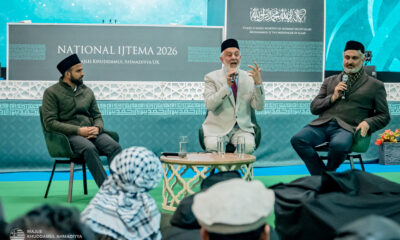
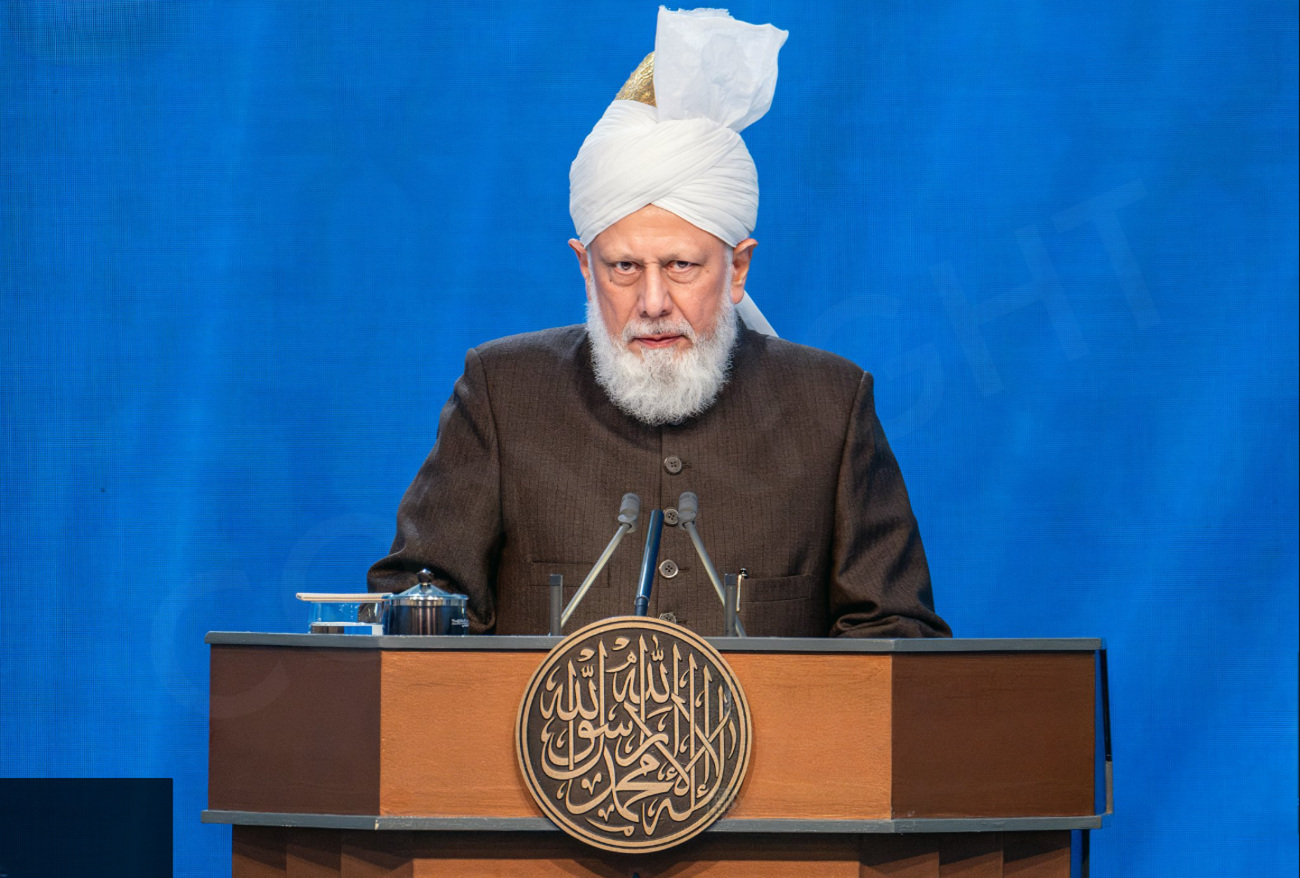
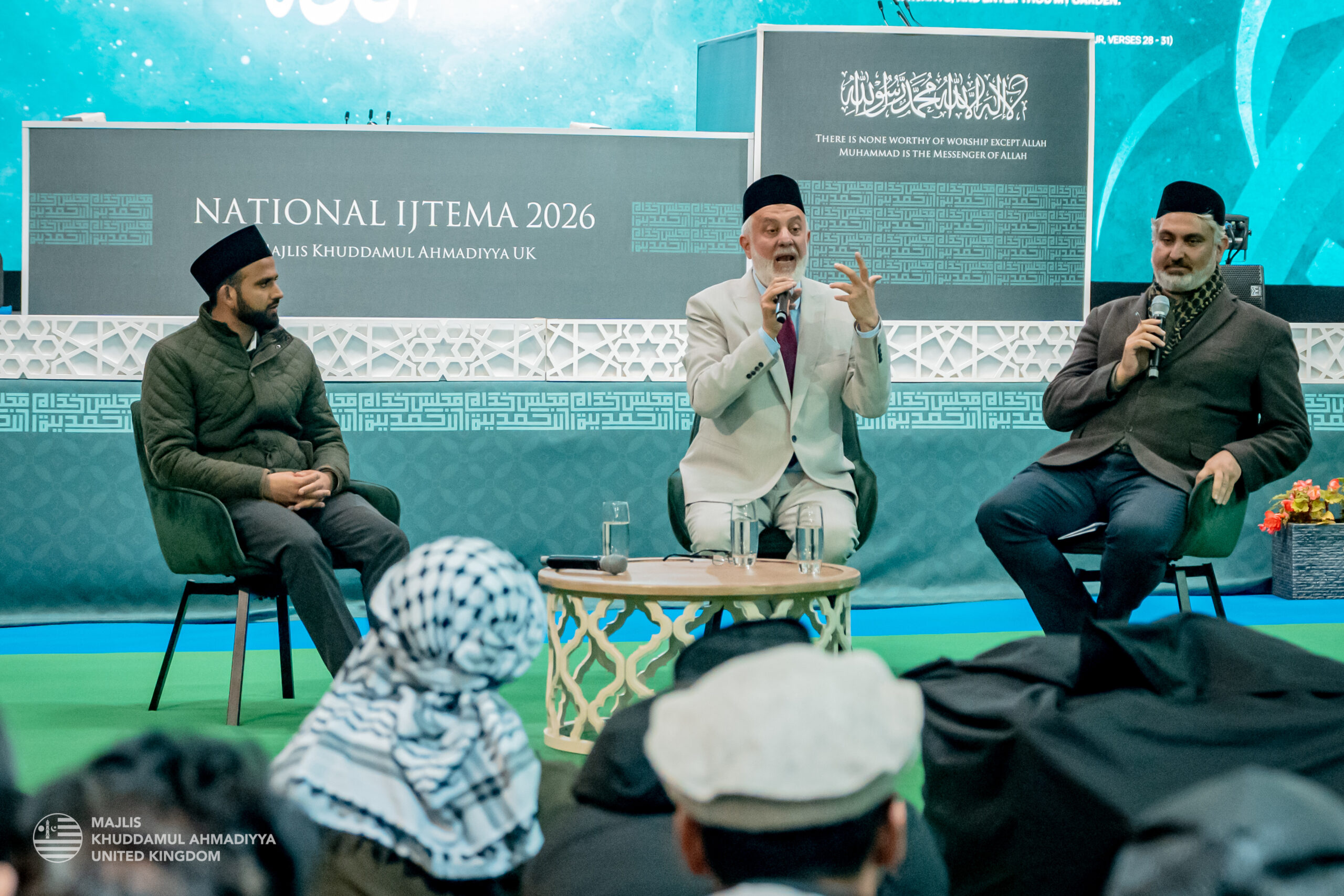
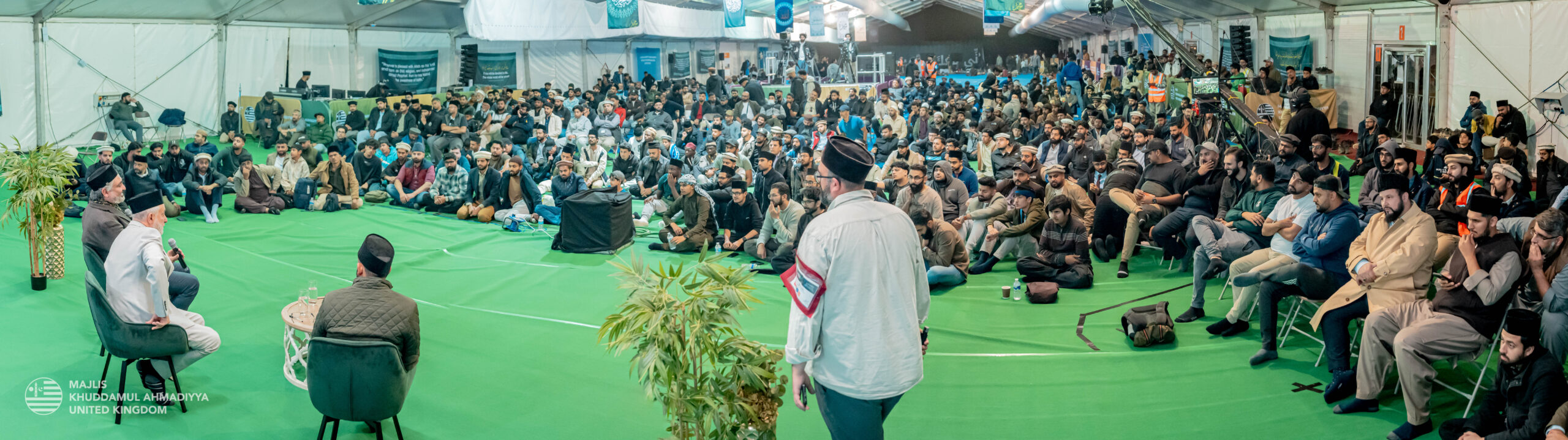
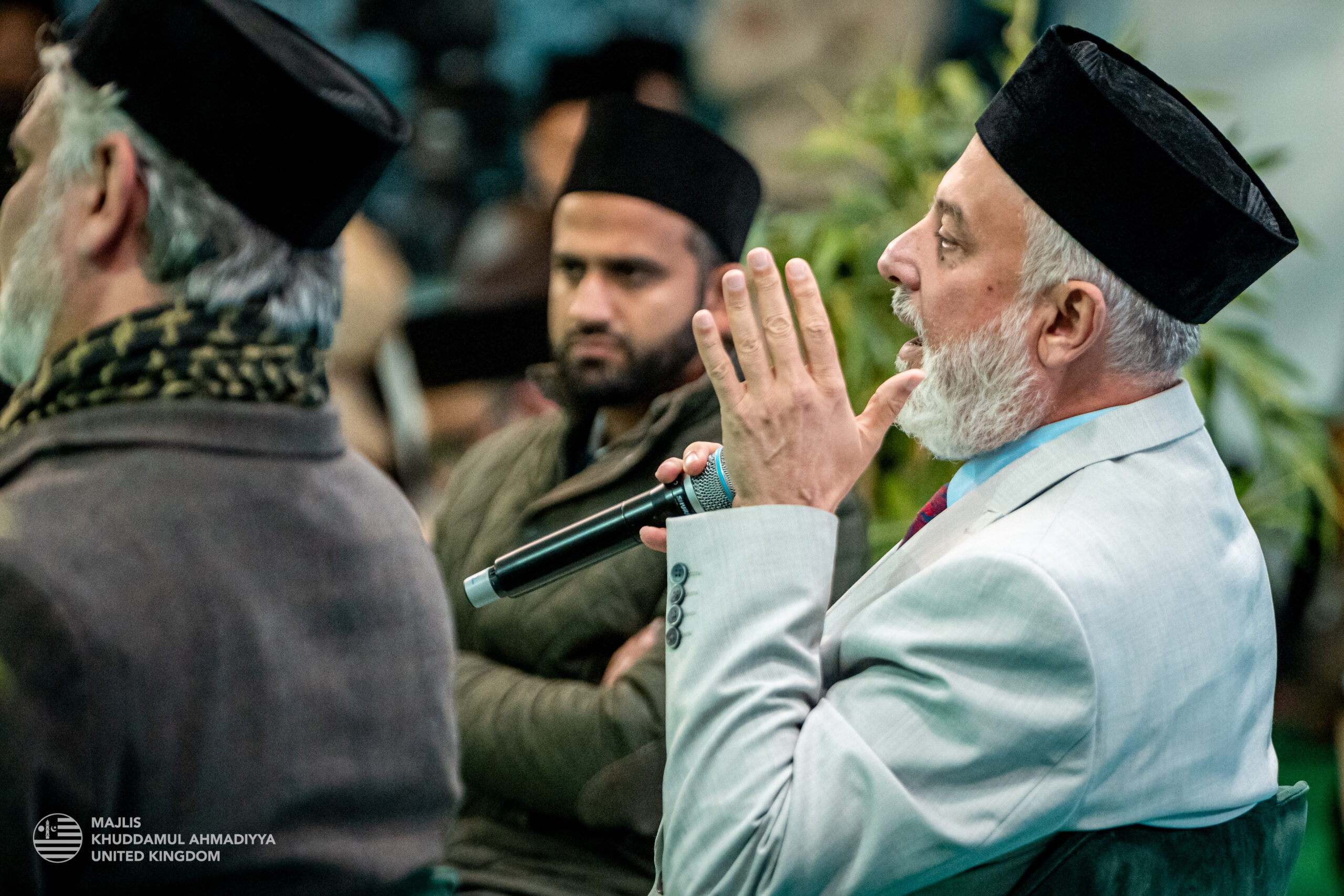
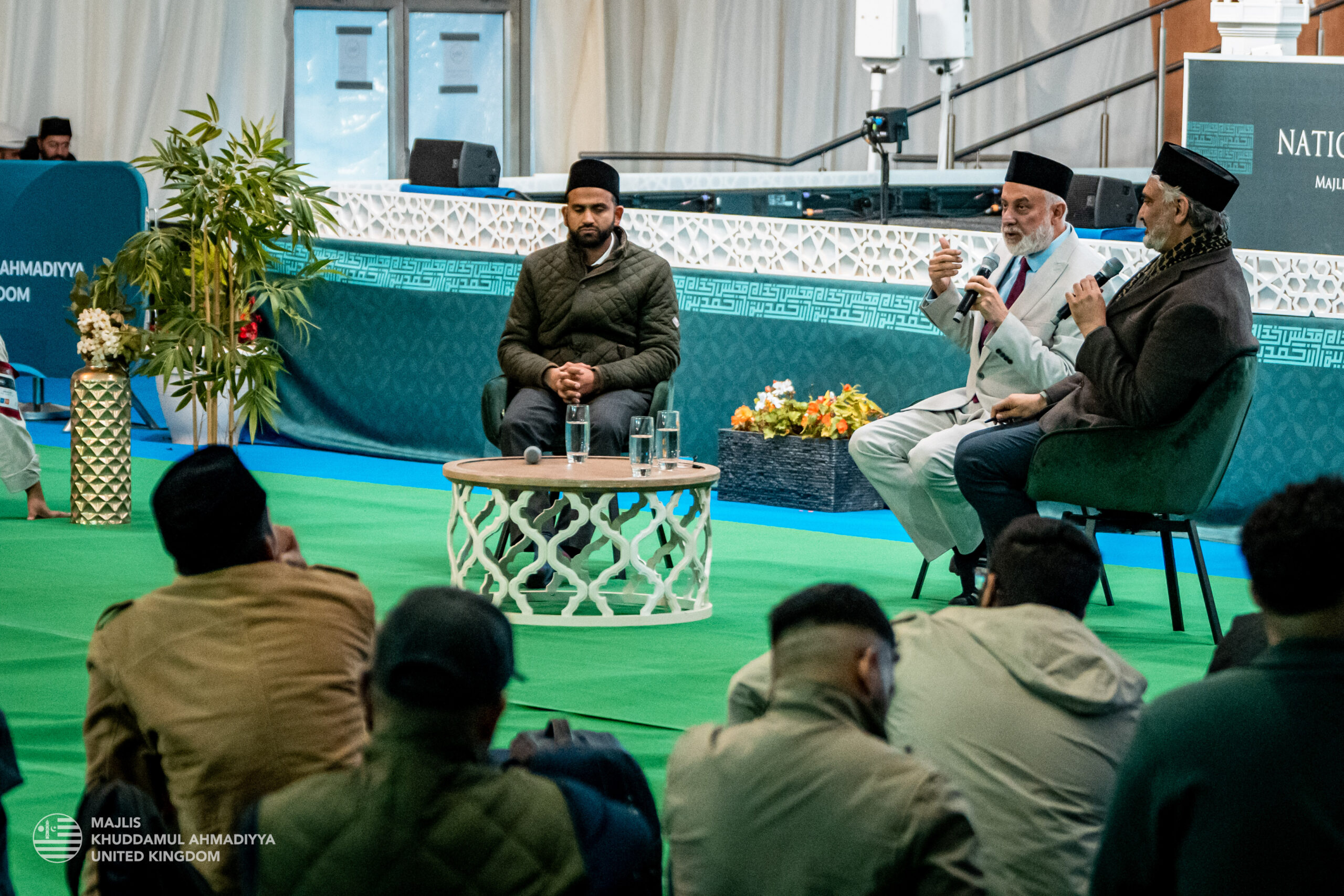
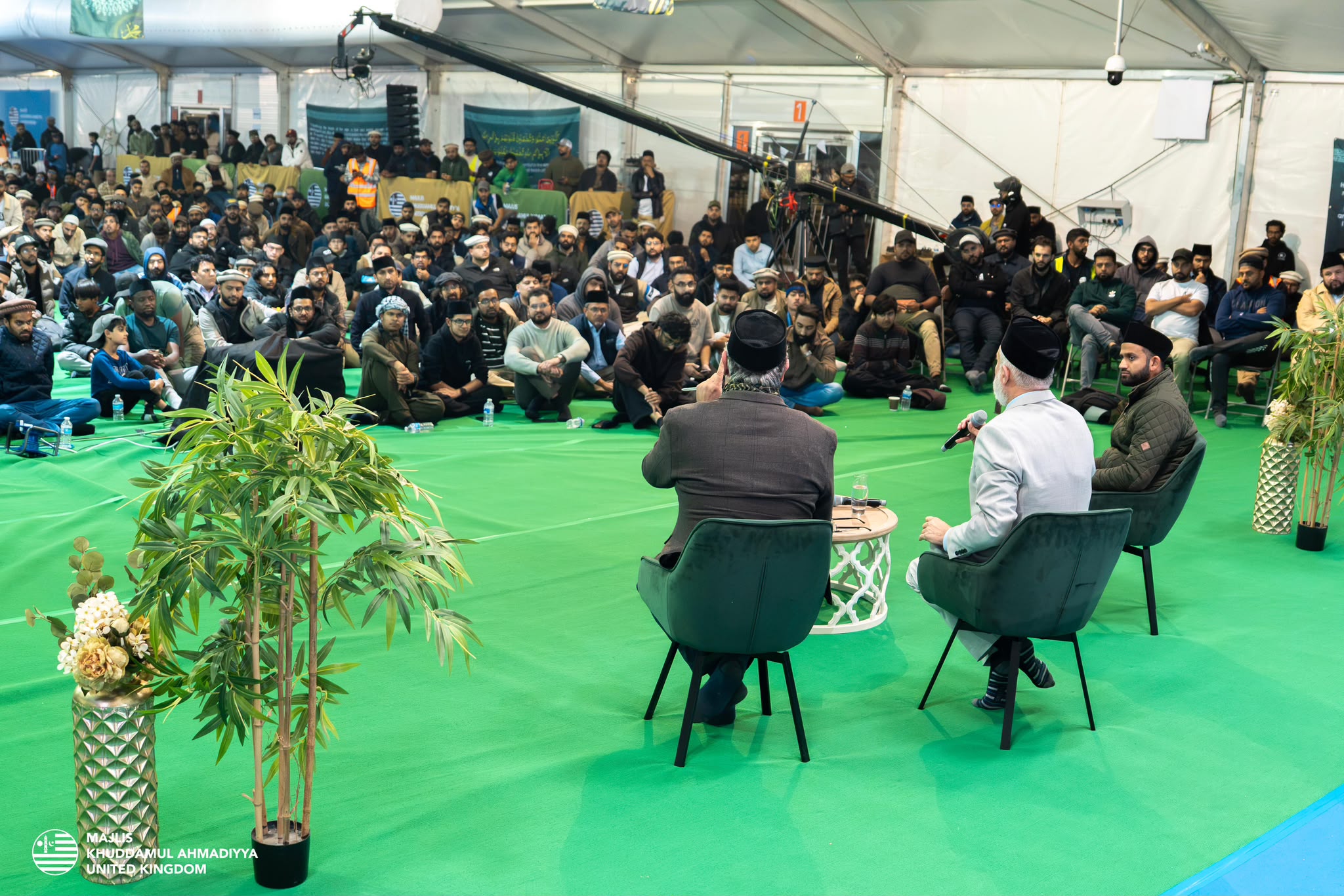
On Saturday 26 September 2026, Muhammad Sharif Odeh Sahib, Amir Jama’at Ahmadiyya Kababir, was invited to the Majlis Khuddamul Ahmadiyya UK National Ijtema for a question-and-answer session with Khuddam. The session provided Khuddam with an opportunity to ask Amir Sahib directly about a range of issues concerning Palestinians living under Israeli governance and the circumstances faced by the Ahmadiyya Muslim Community in the region.
Proceedings:
Sharif Odeh Sahib: In the name of Allah, the Gracious, the Merciful. Peace and blessings of Allah be upon the best of the Messengers, our master and our beloved Muhammad (sa). I am Muhammad Sharif Odeh. We are a Palestinian family with a long and distinct history. Our forefather, Odeh, came from the town of Ni’lin, near Ramallah, and arrived in Haifa in 1850. The Ahmadiyya Muslim Community in Palestine is an integral part of the Palestinian nation. Only a handful of our members are not Arabs; the rest are all Arabs. We suffer alongside the rest of our Palestinian people.
Palestinians living between the sea and the river fall into three groups: the approximately two million Arab Palestinian citizens of Israel, the Palestinians in the West Bank, and the approximately two million Palestinians in Gaza. As head of the Community, I have Palestinian members in Israel, Gaza and the West Bank, and I am in contact with them almost every day. Of course, I suffer too, because people contact me directly, Ahmadis and non-Ahmadis alike. But as an Ahmadi, the road map is clear to me. God Almighty has told us that Palestine, or the Holy Land, will pass through different stages. He set a condition: those who remain there are the righteous.
The Torah had already clearly warned the Children of Israel about the events described in the Qur’an, particularly in the chapter known as Bani Isra’il (Children of Israel). There is a clear similarity between the Qur’an and the Torah concerning this land. The beginning of Surah Al-Isra speaks of the destruction of the first and second Temples of the Children of Israel. God did not tell us these things merely as stories, but as lessons, so that we would not repeat their mistakes. The Holy Prophet (sa) said:
“What befell the Children of Isra’il will befall my Ummah, as closely as one shoe resembles the other.”
When Abraham (as) came to Palestine, the Holy Land and the land of Canaan, the Torah says that he stopped at Beit El, in what is now Ramallah. God told him:
“All the land that you see I will give to you and your offspring forever.”
According to both the Torah and the Qur’an, inheriting the land is not simply a matter of bloodline. Abraham’s heirs were Ishmael and Isaac, although neither had been born when he received the prophecy. Both the Torah and the Qur’an tell us that the righteous are promised to inherit the land. The Qur’an confirms this prophecy:
“And already have We written in the Book of David, after the exhortation, that My righteous servants shall inherit the land.” (Holy Qur’an 21:106)
The criteria are clear. When the Children of Israel became corrupt twice, God drove them from the land. When the Arabs, who called themselves Muslims, became corrupt, they too lost Palestine. They were driven from it by the Crusaders in 1099, and again in 1948. So, what is the resolution?
God also told us in Surah Al-Isra, also known as Bani Isra’il, that He would bring the Children of Israel back to Palestine from all over the world:
“And after him We said to the children of Israel, ‘Dwell ye in the land; and when the time of the promise of the latter days comes, We shall bring you together out of various peoples.’” (Holy Qur’an 17:105)
This was the first time in their history that the Children of Israel had been scattered throughout the world. This Qur’anic prophecy was fulfilled in 1948. It was a misfortune for us and a good fortune for them. God says:
“…say: ‘God! forgive us our sins.’ We shall forgive you your sins…” (Holy Qur’an 2:59)
God also set a condition for the Children of Israel. The Torah says:
“You shall not have in your purse different weights, large and small. You shall not have in your house different measures, large and small. You shall have accurate and true weight and true measure, so that you may live long in the land the Lord your God is giving you.”
That condition is stated in the text. So, we say to the Jews: God kept His covenant with you, but are you keeping your covenant with God? And what was your covenant with Him?
The Lord of the worlds warns them 36 times about their treatment of others, including non-Palestinians. Regarding Palestine, the Holy Land, Hazrat Khalifatul Masih II (ra) said that it is a garden among the gardens of Muhammad (sa). Before Zionism had even considered coming to Palestine, and before the Arabs expected it, the Promised Messiah (as) explained that this land would pass out of Muslim hands for a time, in light of the verse:
“My righteous servants shall inherit the land.” (Holy Qur’an 21:106)
The Fourth Khalifa (rh) said that we must also convey this message to the Jews; they too must be informed. If they accept Islam, they can also be part of this land, because God said that His righteous servants would inherit it. He did not say that the Jews or the Palestinians would inherit it simply because of their identity.
In a meeting with Arabs in 1994, the Fourth Khalifa (rh) told the Palestinians not to fight Israel. He said that if they fought against this destiny, Palestinian land would shrink while Israel’s land expanded. It would be one suicide after another. This had also been Zafarullah Khan’s position. Had the Palestinians accepted the advice of the Ahmadi Khulafa, Israel might today have only 25% of the land of Palestine. The Fourth Khalifa’s words have been fulfilled in a remarkable way: whenever Israel fought, Palestinian territory shrank and Israel’s expanded. The Palestinians lost thousands of hectares of their land.
We must base our position on the teachings of the Qur’an and the explanations of the Promised Messiah (as) and the Khulafa. We must understand the words of God and the Prophet (sa) through the Khulafa. In January 2009, during the war between Israel and Hamas, the current Khalifa (aba) said that they would lose what they had fought for in the name of religion. The Promised Messiah (as) had already told Arabs and Muslims not to wage war in the name of religion, and these prophecies have been fulfilled in a remarkable way. Giving this advice does not mean that we hate the other side.
We do not hate Jews for being Jews, or people who disagree with us. We love everyone. Our motto is “Love for all, hatred for none,” and we must put it into practice. At our recent Jalsa in Kababir, we spoke about the covenant of Medina and what it means to be good citizens. The Holy Prophet (sa) did not establish an exclusionary religious state. He told the Jews and the other Arabs that we are all one nation. We carry a universal, humane message of Islam: “Humanity First”! We put it into practice through our actions as well as our ideas.
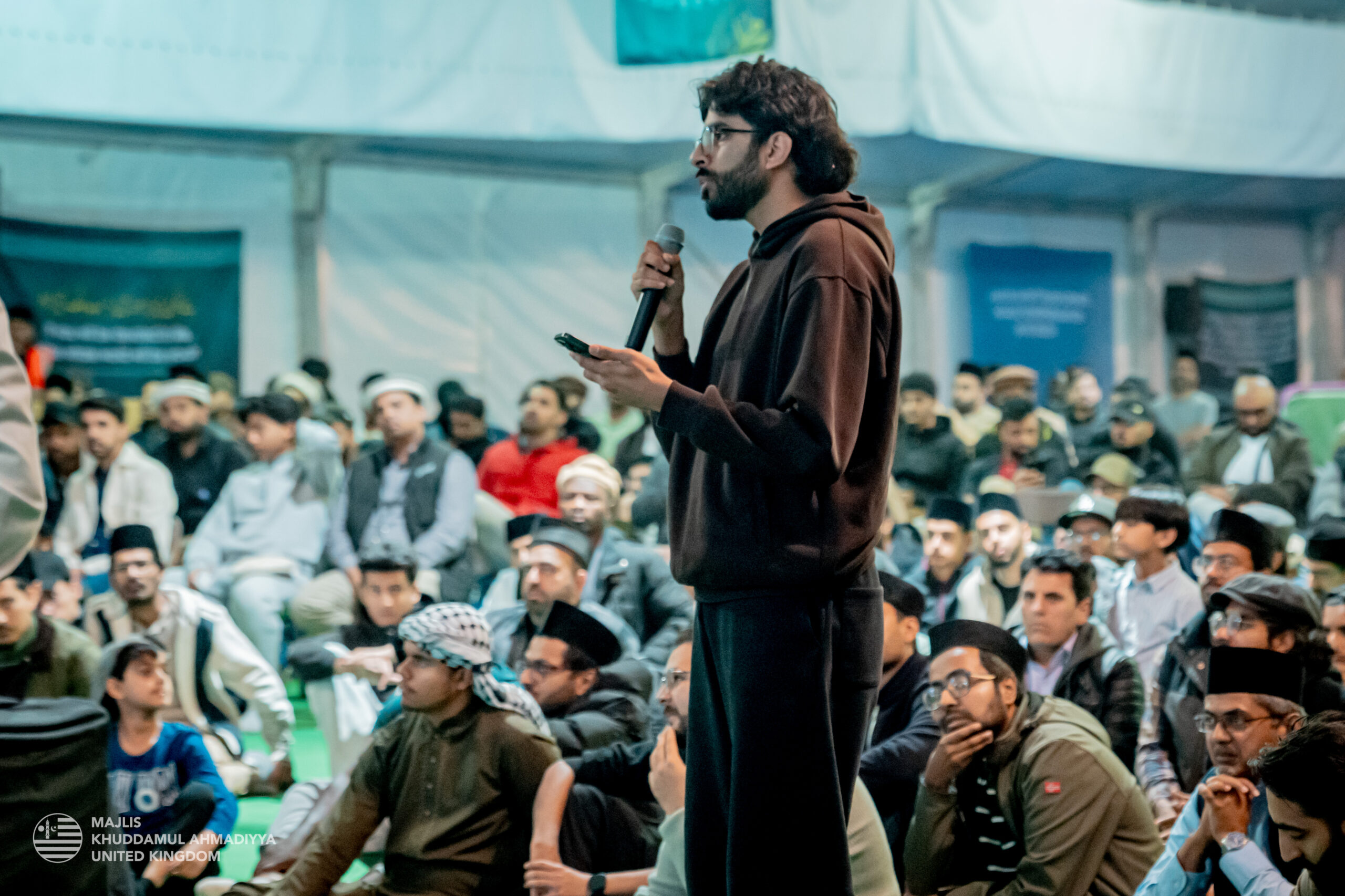
Question:
I understand the rationale for inviting the president to the Jalsa Salana and showing him respect because of his position as head of state. However, what does the Jama’at hope to gain by giving him a platform to speak at our Jalsa? The Jalsa is about the spiritual reformation of our Jama’at. What is the purpose of allowing someone who advocates genocide, incarceration and the ethnic cleansing of Arab people to speak there?
Sharif Odeh Sahib: One of the purposes of Jalsa Salana is to invite others, not only Ahmadis. Hazrat Khalifatul Masih II (ra) said that some of those we invite are moved by the Jalsa and join the Community. We carry a message for everyone, whether they are a leader or an ordinary person. The Holy Prophet (sa) said that a form of Jihad is to speak a word of truth before an unjust ruler. If you have an opportunity to meet a president, should you speak that truth to his face, or only discuss it privately among ourselves? Or should you act like a champion on the internet, from behind a keyboard?
We see this teaching in the Holy Qur’an. Pharaoh killed the sons of the Children of Israel and their women, yet God told Aaron and Moses to go to him:
“But speak to him a gentle speech that he might possibly heed or fear.” (Holy Qur’an 20:45)
Why? God could have punished him, but this was God’s plan, and we should follow it. The Prophet (sa) also said:
“When a distinguished person of a nation comes to you, honour him.”
Let everyone be reassured: as Ahmadis, we do not depend on the Israeli government or any Israeli organisation. I told them this. Everything we do is funded by donations from members of the Community. By God’s grace, we were among the first to translate the Holy Qur’an into Hebrew and have been doing this work for many years. Recently, the head of the Palestinian Islamic Movement in Israel and members of its Shura Council told me personally:
“We appreciate your work in defending Islam, because not a single sheikh defends Islam and Muhammad (sa) in Hebrew as the Ahmadiyya Muslim Community does. I challenge anyone to show otherwise: there is absolutely no such sheikh.”
Mansour Abbas, a religious figure and the head of the second-largest party in the Knesset, said this. He also said:
“Sharif is the one who represents me when responding to Jewish objections.”
Members of the Shura Council who attended the Jalsa praised and thanked the Community for this blessing. They said that God had destined it and that we, the Ahmadis, should thank and praise Him for giving us this opportunity to convey Islam and present it beautifully. Yet I hear objections from some of my brothers and loved ones. I respect their concerns, which arise from their care for and love of the Palestinian people. However, no Palestinian official has objected in the last ten days to what we did at Jalsa Salana. On the contrary, many agreed with us. They wrote to us, spoke to us and recorded messages, including people from the Egyptian and Emirati embassies and governors of the Palestinian Authority. Just this morning, one person told me:
“I listened to the speech twice, and I agree with every word you said. I will share some of the responses from Muslims and Palestinians about the Jalsa.”
We are not separate from the rest of our people. Palestinian Arabs inside Israel have welcomed President Herzog several times; sheikhs and others have invited him to their homes during Ramadan. He is not Netanyahu, nor does he make political decisions. Palestinians themselves say that the way forward is to speak with people and help ease the paranoia in Israeli society. You must understand that we know our own circumstances best. We face real incitement against us as Arabs every day. Islamophobia has made Israeli Jewish society paranoid. When people become paranoid, they grow numb and lose their humanity. What is the remedy?
Should I keep shouting at him and insulting him, saying, “You’re a criminal”? Or should I pull the rug out from under his feet by saying, “You lived alongside us for 1,400 years in safety, peace, stability and security”?
That is the right remedy. A month ago, all the Palestinian Arab parties met in our mosque. One member of the Islamic party said:
“You’re the only one who can bring us all together around one table.”
There is mutual trust between us and our brothers. They know that we work for God’s sake. We want to save the Jews from their own wrongdoing and Muslims from theirs. The answer is to pray for them at night and weep before God. Islam did not come only for Arabs or Pakistanis; it came for all humanity. As Hazrat Khalifatul Masih III (rh) said:
“I have read the Qur’an hundreds of times, and there is not a single verse in it that gives Muslims superiority over others.”
The Qur’an says “O mankind” (Holy Qur’an 49:14), rather than “O Arabs.” We need to consider how to deal with reality. I did not create the current reality. If I can ease my people’s suffering, that is sacred work. If I can call the Israeli president on his mobile phone about a problem in the West Bank and he responds, then I have eased my people’s suffering. I want nothing from him: no job, no favour and no honour.
At dinner, before we came out to the session, I told him, “Our soldiers are stronger than yours.” He said, “You’re dreaming.” I replied, “Our soldiers are soldiers of Heaven; yours are soldiers of the earth.”
Anyone who objects should listen to the speech. Which Islamic scholar, Arab leader or Muslim has spoken with such force and clarity, not only in front of the Israeli president, but before nearly a thousand people, including leaders of Israeli society, academics, former security officials, thinkers, lawyers and the media?
As I wrote to Huckabee two months ago, most Israeli media outlets covered the event. It was also covered in India, Turkey and elsewhere. Perhaps more than a million people have now heard what I said. Some of these matters are difficult to understand, but this is the way of the Prophets. The Holy Prophet (sa) welcomed, greeted and embraced his enemies. The Promised Messiah (as) tells us to pray for our enemies. The Holy Qur’an says:
“And good and evil are not alike. Repel evil with that which is best. And lo, he between whom and thyself was enmity will become as though he were a warm friend.” (Holy Qur’an 41:35)
That is the teaching. When we are tested, we feel the pain. I weep in prayer for my people. I stand with the oppressed, whoever they are, and all the more so when my own people are being oppressed.
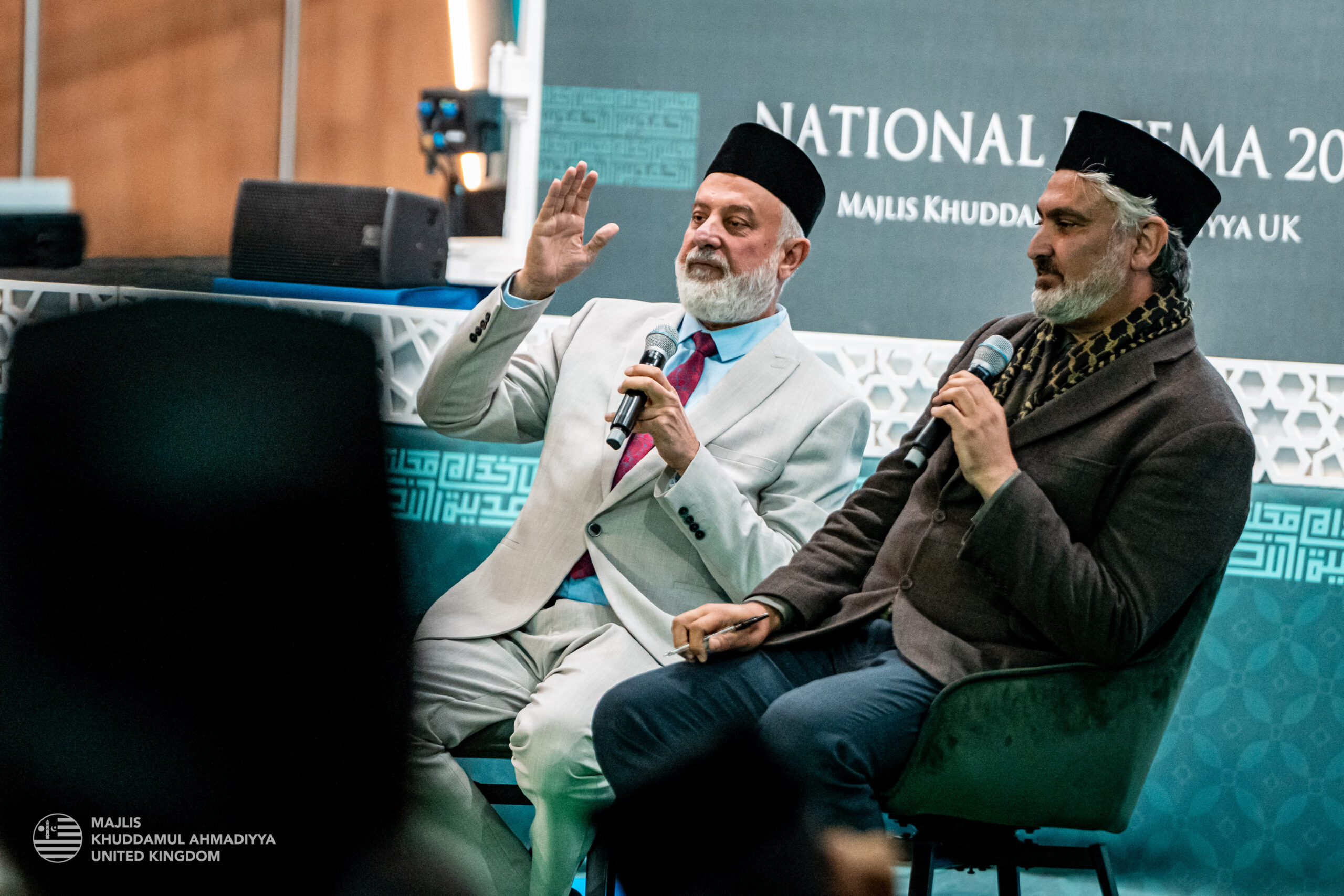
Question:
Why did you hug the Israeli president? Do you not think this was disrespectful? With due respect, could you clarify the photograph of you with him that is circulating on social media? Should you have avoided this encounter in view of the current situation?
Sharif Odeh Sahib: What would you expect me to do: tell him to go away or push him aside? I struggle to understand. I have already answered the question, but what do you expect me to do? Push him away and kick him out of the door?
Usman Butt Sahib: There is a matter of decorum, tact and sensitivity, as well as respect and etiquette towards a visiting guest. Amir Sahib has already covered this in his earlier answer.
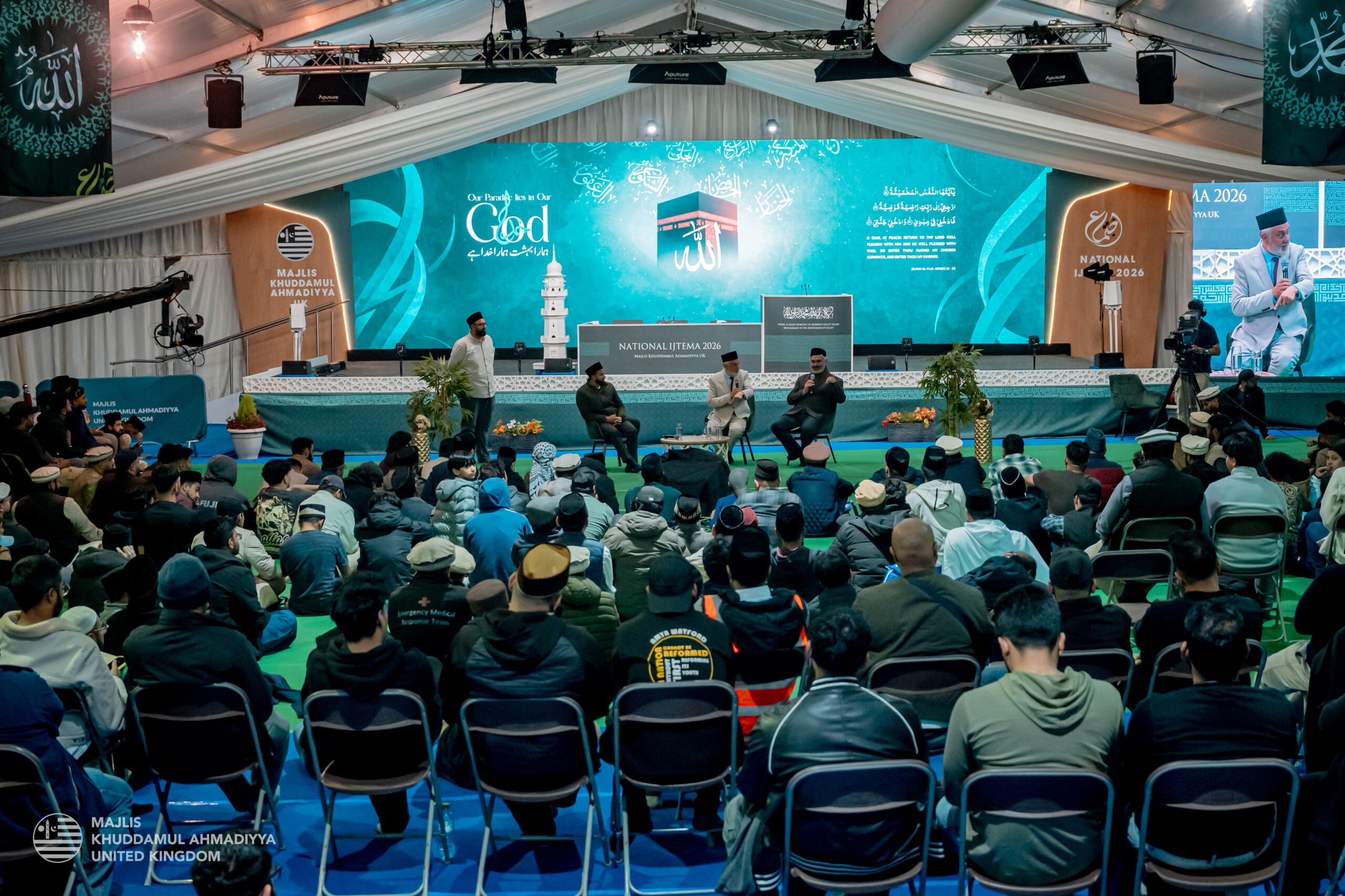
Question:
You mentioned that the president was invited because of his position in the country and that we must show him respect. I understand why he was there. At the victory of Makkah, Abu Sufyan was also shown respect, with people being told to enter his house if they wanted safety. Were there any diplomatic or political constraints that prevented Amir Sahib from addressing the situation in Gaza and the West Bank directly in his speech?
My second question concerns the prophecy and the expulsions, particularly the mention of 1948. I am not a scholar of the Jama’at or of religion, so please correct me if I am wrong, but my understanding is that Hazrat Khalifatul Masih II (ra) specifically said that the expulsion was not due to the sins or spiritual decline of the Palestinians. Why, then, was the 1948 expulsion mentioned in the context of transgression and the breaking of the covenant? JazakAllah.
Sharif Odeh Sahib: If you permit me, I will summarise. The whole speech addresses the injustices committed against the Palestinians and the racism that exists. Listen to it again. It was translated into Arabic and English, and Palestinians heard it. All the media outlets in Palestine reported the event. The Palestinian television station Musawa even made a long programme and interviewed me. No one objected. On the contrary, people said, “You presented the Palestinian cause properly.”
Must I specifically name the West Bank, Tulkarm or Gaza, and so on? We know what we are talking about, and the president knows it too. I speak in Hebrew on radio and television and discuss these matters. Our Centre receives large numbers of non-Muslim guests. We invite them to learn about Islam and explain our suffering to them. I tell them that this will harm them too and that they will collapse. The same point was published by Professor Ciechanover, a Nobel laureate in Chemistry:
“If you do not embrace the Arabs, there will be no future for a liberal state. And this country shall collapse.”
I said this plainly, and it was recorded. You can share it around the world. Israel’s danger does not come from the Arabs; it comes from within. But we are the ones who will suffer most. We want to stop the suffering of the Palestinian people. Jewish society has become paranoid and wants only war. As I said in my address, “War will not bring you peace.”
This was broadcast on Palestinian television. I, my children and my grandchildren will suffer; my people will suffer even more. It is easy to voice an objection from far away or post a statement of condemnation. Neither Arab nor Muslim countries can change this reality. Some write a tweet or a post and feel that they have fulfilled their duty. We are the ones on the ground, and we know our problems and how to solve them. For 80 years, we have struggled and reached the same result: mistakes, destruction and ruin. Yet we keep following the same path. What did the current Khalifa say in January 2009?
Huzoor said, I pray that God may grant the Palestinians wise leaders. Taking your people towards destruction is not wisdom. Anyone who supports such leaders shares responsibility for the crime, just as the Israelis do. Condemnation has been taking place all over the world, but if you want to move people’s hearts and show them a genuine example of coexistence, tell them the beautiful story: that you have lived alongside us for 1,400 years in safety, peace and stability.
Jewish people, particularly the younger generation, do not hear this story. But when you change the way you speak, love overcomes evil. God tells us to treat an enemy as though he were a warm friend so that we can overcome his evil. Yehezkel Dror, an adviser to successive Israeli governments and to Western governments, wrote a book called Refounding Zionism. In a lecture, he said:
“We failed to bring Jews from around the world together and make them one nation.”
He said that the danger to the Jews comes from within: Russians remain Russian, Iraqis remain Iraqi, Germans remain German, and so on. They do not come together in anything, not even in their prayers; different communities have separate synagogues. He said, “I have to create an external enemy to unite you.”
The powerful tool in my hands is to persuade ordinary people who have been misled that I am not their enemy, and that they lived alongside us for 1,400 years. That is why we presented twenty Jewish writers, some of them Israelis, who said that Muslims and Jews had lived together in safety, peace and stability. People may not like hearing it, but it is true. We face two problems: religious Zionist Jews, who hold power at present, and the Evangelicals who govern America. God will now intervene, as they are carrying out these actions in His name.
Do you work here in the UK? If you work and pay taxes to a government that sends weapons and missiles to kill Palestinians, then you are helping to support the war in Gaza. That is the situation. Is that true or not?
What proportion of Britain’s budget is allocated to the military?
In Israel, 70% is allocated to weapons and the army. The money does go towards that. What I am trying to explain is that the situation is complex. American Jews who support Israel, and the US ambassador to Israel, are more dangerous than Israeli politicians themselves. I will tell you where the problem lies: with us, the Arab citizens of Israel. If Palestinian Arabs in Israel had turned out to vote at a rate of 70% four years ago, there would be no Smotrich, Ben-Gvir or Netanyahu. That is what I tell them today. I am going back to encourage Arabs to achieve a 90% turnout at the ballot box.
The answer will not come from old, ailing Europe or America, because their beliefs lead them to support what is happening. The Arab world is cowardly. They do nothing for people beyond making a few statements, like scratching scabby skin for temporary relief. We are the ones who suffer every day, including the Arabs inside Israel. We have a centre in the West Bank and work across its northern and southern areas. I visit there too. We provide medical aid to the Palestinian people, funded by donations from Community members, and some decent Jewish people also donate medicine.
Do you think I was unaware that the president’s visit would cause problems? Or that Huzoor was unaware it would raise questions and give us a headache? Do you think I could receive the Israeli president, or anyone else, without Huzoor knowing?
The persecution of Ahmadis continues in Pakistan, but the Jama’at continues to help the Pakistani people and will keep doing so. Our morals do not change with our circumstances, whether we are being oppressed or not. We are like a train: we keep moving forward.
Do you think no one objected to our speech? Some Jews produced religious rulings declaring us non-Muslim so that they could tell other Jews that I do not represent the Arabs or the Muslims. One Jewish man told me:
“From today on, I will not sleep at night.”
Why? Because this powerful speech affects people’s hearts. The Promised Messiah (as) stated that his words would have a far greater impact on people’s hearts than a hundred thousand swords. Words have power. Words spoken with Divine light affect hearts. I could show you dozens of messages from people moved by this message. Some said they would read the Qur’an again or begin reading it; others said, “This is the solution.” People are not all evil, including the Jews. The Qur’an itself says:
“They are not all alike.” (Holy Qur’an 3:114)
It is my duty as an Ahmadi Muslim to convey this message and keep working. The rest is in God’s hands. The situation in Palestine will not change through human effort alone; people must reform themselves. Ultimately, change comes from God.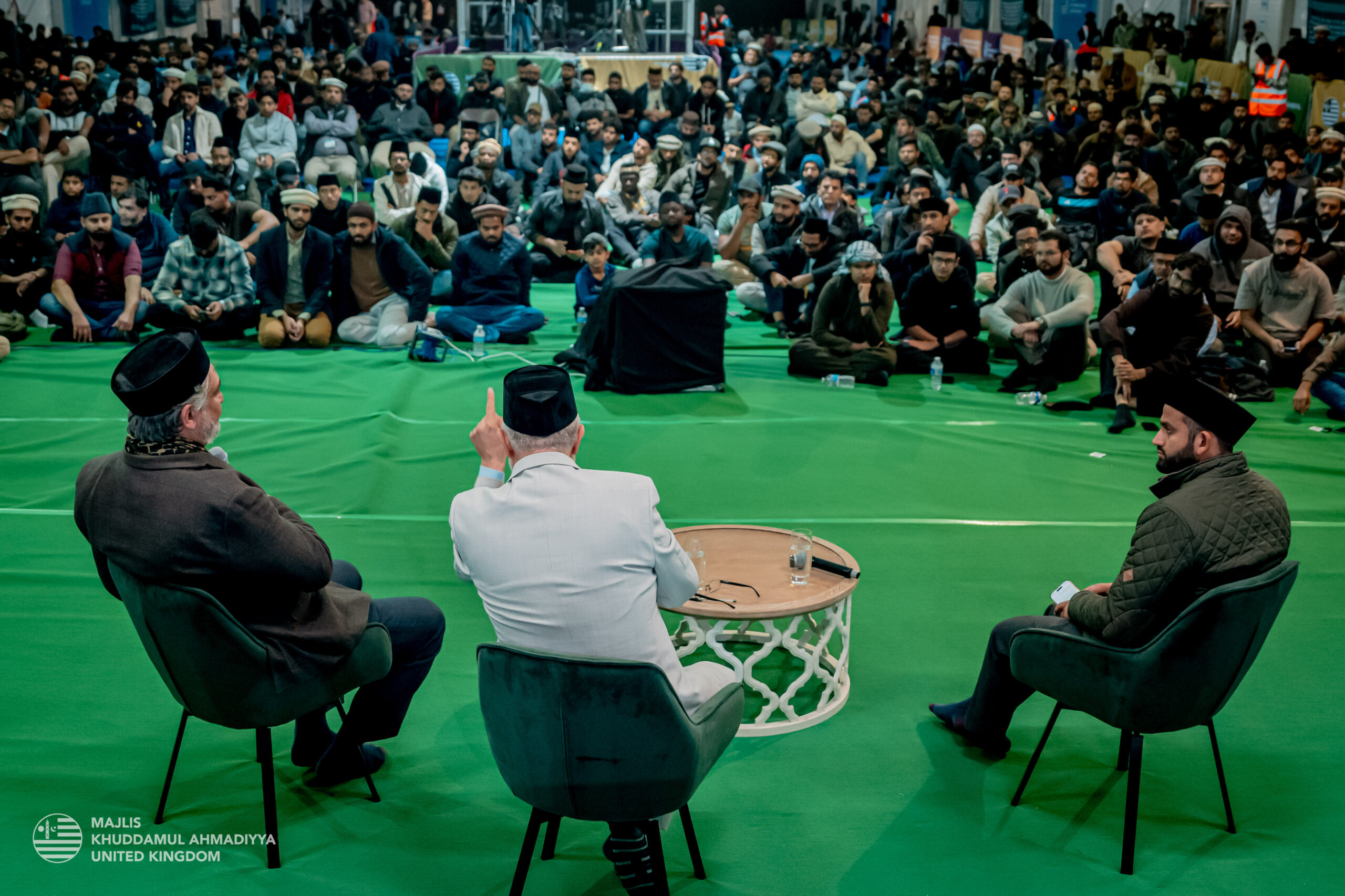
Usman Butt Sahib: The second part of your question, please.
Question:
My second question concerns the covenant and the expulsion in 1948. Please correct me if I am wrong, but my understanding is that the Jama’at has never held that the Palestinians’ expulsion in 1948 was due to their sins, transgressions or spiritual decline. Could you clarify why 1948 was mentioned in the context of the covenant?
Sharif Odeh Sahib: Read Surah Bani Isra’il. The covenant is clear, and the Fourth Khalifa also spoke about it in 1994. We are discussing something that has already happened, rather than a prophecy awaiting fulfilment. Why did it happen?
“My righteous servants shall inherit the land.” (Holy Qur’an 21:106)
The Fourth Khalifa said that God did not make this promise specifically to the Palestinians or to the Jews. Be righteous, and you will inherit the land. Why were they driven away? I am Palestinian, and I know about the circumstances in Palestine in 1948 from what our grandparents taught us. Yes, there was corruption. God is not unjust to His servants. So, what happened?
If we had been righteous, no one in the world could have changed God’s decree. But this is what was decreed. What other explanation can you give? Read the commentary on the verse:
“And after him We said to the children of Israel, ‘Dwell ye in the land; and when the time of the promise of the latter days comes, We shall bring you together out of various peoples.’” (Holy Qur’an 17:105)
Why did God bring them from all over the world? Your complaint, then, is to God. The Promised Messiah (as) said that if this land passed out of Muslim hands, it would do so for a time. Why did God tell us the stories of the Children of Israel in the Qur’an? Are they merely stories, or do they contain a lesson?
Behave well, and you can inherit the land; behave badly, and you will lose control of it. Allah the Almighty has established this rule. We are discussing a reality, rather than a prophecy awaiting fulfilment or an interpretation of one. As a Palestinian, I can tell you that, from what our forefathers taught us about the circumstances in Palestine, there was a moral problem: we had moved away from religion. If you object, you are objecting to what Allah the Almighty has decreed in the Qur’an. Read the commentary in Tafsir e-Kabir on the verse concerning the return of the people of Israel to this land in the latter days.
Question:
My question concerns how this is perceived by a Western audience. There is a perception, or at least a risk, that this form of engagement with the Israeli government, and with a president who openly denies the genocide, helps to improve their international image. Surely Herzog, Netanyahu and Smotrich know what is happening in Gaza. They are not ignorant of the atrocities being committed in Palestine.
Israel has a record of presenting the Druze, Arab Christians and other minorities as evidence of its tolerance, suggesting that it accepts gay people and is comfortable with Ahmadi Muslims, while using this as cover for the slaughter of children in their beds. Many people also struggle with language describing the president as our friend or an honourable person, or thanking him from the bottom of our hearts for attending. In my view, he is not an honourable man; he is a disgrace. I understand that we do not live in your circumstances, so I cannot speak from your perspective, but these are some of the concerns from a Western point of view.
Sharif Odeh Sahib: I will try to summarise. You do not regard him as respectable or honourable, but I do, because:
“If an honourable man of a nation visits you, you should honour him.”
This is the Islam that I understand. If Huzoor tells me that I am mistaken, I will accept it. But people should not go ahead of the Khalifa in what he says. That takes us into the problematic territory described in the Qur’an:
“O ye who believe! be not forward in the presence of Allah and His Messenger…” (Holy Qur’an 49:2)
It is not permissible for everyone to pick and choose what suits them. I am not infallible. It would be much easier to sit at home and do nothing to serve my nation; I would then avoid making mistakes. May I be allowed a margin for error?
I do not understand your position on this point, because the speech and its arguments are powerful. Listen to it again carefully after seeking Istighfar, and consider its impact on the Jews and the Palestinian Arabs. Even as I sit here with you, a message has arrived from Ramallah. I have not yet read it. It says:
“What Muhammad Sharif said in his speech was unusual. That in itself does not mean it was wrong.”
This is from a Palestinian man in Ramallah who was in an Israeli prison just a month ago. I can send you all the comments from Palestinians. I understand that you are in Europe and see the photographs, but we are in contact with people on the ground in Gaza and the West Bank every day.
Abdul Qader, the head of our Community in the West Bank, is Palestinian. He fought in Afghanistan, was a radical and was with Hamas. He accepted Ahmadiyyat and made a video responding to those who say it is wrong to receive the Israeli president. His comments are in Arabic, and I have asked someone to translate them into English for you. What do you expect him to do: return to Afghanistan and fight? What would that achieve?
If you would like the video, send a message to 00972 522 554316. Do not hesitate; you can ask difficult questions. I will continue my work and will stop only if Huzoor tells me to do so. Objections will not prevent me from carrying on. Muslims are now saying that this is the right path. We do not have weapons with which to fight, but we can strive through our message of Islam. I want you to know that I am an Ahmadi Muslim. The message of Ahmadiyyat, and the interpretation of the Khulafa and the Promised Messiah (as), can reach the hearts of Jews and non-Jews alike.
Question:
We understand your explanation of the hug and why you felt it was necessary, but why was the photograph posted on our social media accounts?
Sharif Odeh Sahib: This is where a margin for error should be allowed. I am not being defensive. I am advising my Ahmadi brothers, especially Pakistani Ahmadis, to move from a defensive position to an offensive one. Otherwise, some people might say, “Ah, I think the Ahmadis are cowards.”
If what we do is for God’s sake, do not worry. He is the One Who protects and defends us. As I have said, allow us a little margin for error. To overlook the beauty of the speech, the programme, and dismiss the whole programme because of one point we dislike, would be a disaster. It brought Arab and Jewish groups together around one table. In the face of this beauty and Divine success, say, “Praise be to God.” Peace be upon you.
Jews, including security officials and university students, as well as Palestinians, have heard the same things that you have heard from me. Abu Mazen, Mahmoud Abbas, heard me say this twice when I spoke with him. He nodded and told his religious adviser, “This is what the people need to hear.” I told him, “You are the president; I am not.” He said, “What do you want me to do? When I speak like you, they call me a collaborator. But the problem is that politicians are skilled at lying.”
At the beginning of the war, Huzoor graciously granted me a mulaqat and said, “Look, there is no paper or other work in front of me on the table, nor is anyone waiting outside.”
We sat with Huzoor for two and a half hours. There had been a lockdown for some time when the war began, but I eventually managed to come here, and Huzoor invited me to his office. He said, “Can you see? There is nothing on the table. I am here, with no letters and nobody outside waiting for mulaqat.”
Whatever I say to the Jews, I inform Huzoor of it. My understanding and my speech, is it correct? Without the blessing and prayers of the Khalifa, all our work would be in vain and have no value. You can draw your own conclusion.
Question: Since we are a religious rather than a political organisation, how can we convey the message of Islam bravely and respectfully? Like the issues surrounding the Israeli president, some subjects are difficult to discuss with our English colleagues, seniors and politicians.
Sharif Odeh Sahib: Our approach is to answer such questions as Huzoor has guided us. We have no personal enmity towards homosexuals, and we do not go to their homes to see what they do. We state our religious position clearly, explaining what our religion teaches and what their religion teaches too.
Question:
Since the war in Gaza began, what progress has the Jama’at made? Have there been more bai’ats and more people turning towards Islam Ahmadiyyat?
Sharif Odeh Sahib: As I said at the beginning, praise be to God. In defending Islam and addressing the Palestinian cause, the Community uses the means available to it. We do not have planes or tanks; we have kind words for everyone. We work to guide people and strengthen their faith, Jews and Arabs alike. That is why the Community is listened to with respect. Islam has the power to affect people.
We also do practical work. For example, you are a doctor: come to me, and I will take you to the West Bank to treat patients with medicine alongside other doctors. I will conclude with two comments from Arab non-Ahmadis. One is from our brother Murad Nassar, a well known personality from Ramallah, who attended the second day of the Jalsa. First, however, we will hear from Dr. Muhammad Abu Rashid, a former member of the Shura Council who attended the Hebrew-language session on the first day:
“Peace, mercy and blessings of Allah be upon you. I had the honour yesterday of attending the Community’s annual gathering and was deeply delighted by your brilliant achievement. Allow me to record these brief observations. You accomplished a monumental task of organisation that even major organisations and political parties would struggle to undertake. Beyond God’s grace and guidance, this demonstrates your excellent leadership, care and extraordinary ability, together with a small group of noble, sincere assistants, to deliver such a wonderful and distinguished event. God guided you well in selecting the theme of the gathering, reviving an important historical milestone in Islamic da’wah and, indeed, in human history. It is fitting that you expressed your gratitude and reverence to God for this blessing and favour, which enabled you to act on behalf of the Islamic Ummah, Muslims and the legacy of the master of the Prophets, Muhammad (sa). As always, your address shone with the knowledge, ability, eloquence and broad command that God has granted you in subjects in which specialists and researchers among our people are rare. I need to listen to the address again to note a few observations out of love and esteem for you.”
Murad Nassar, who is not an Ahmadi, sent me a letter after the war in Gaza ended. This is important. He began, “Good morning, full of light and joy to our venerable Amir and leader.” He wrote:
“We woke up today, alongside our Palestinian people and the Islamic nation, to happy news. We breathed the breeze of goodness and peace as the war machine and its hellfire came to a halt. Yes, we made sacrifices, lost so much, endured deep pain and loss, witnessed cities and memories destroyed, and lived through terrifying events that befell our people in Gaza. Hamas made mistakes, certainly, but it was not entirely their fault. The Strip had been subjected to successive policies of hatred, marginalisation and deprivation of the most basic rights, which ultimately led to this explosion. The Israeli response was brutal and criminal, like a rolling snowball of hatred and racism growing ever larger. We are not here to debate who was right or wrong, or who was the oppressor and who was the oppressed. What I want to say on this rainy morning, filled with hope, is thank you, thank you, thank you to our Amir. Thank you to the Jama’at, the Ahmadiyya Muslim Community. I cannot help but think of you, your steadfast position and your achievement in speaking the truth during difficult and trying times. I cannot forget your courage and the firmness of your stance despite threats, hardships, attacks and even isolation at times. What you have done is by no means easy. Your role is to explain and clarify the true teachings of Islam, uphold peaceful coexistence and security, and emphasise the sanctity of human life. You made it clear that discourse must be one of love, not hatred.”
May God be your Protector.
Editorial
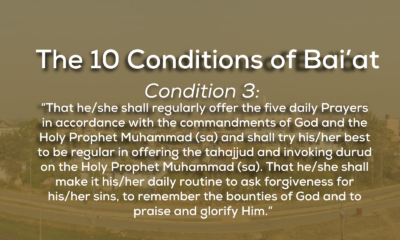
Condition 3 of Bai‘at: Offering Prayers & Durood
“That he/she shall regularly offer the five daily Prayers in accordance with the commandments of God and the Holy Prophet Muhammadsa and shall try his/her best to be regular in offering the tahajjud and invoking durud on the Holy Prophet Muhammadsa. That he/she shall make it his/her daily routine to ask forgiveness for his/her sins, to remember the bounties of God and to praise and glorify Him.”
Recently, at Jalsa Salana Qadian, Hazrat Khalifatul Masih Vaba instructed that the Ten Conditions of Bai‘at should be hung up in our homes and that we should strive to abide by them strictly. These conditions define what it truly means to be an Ahmadi Muslim, and for Khuddam especially, they guide us to a life of closeness to Allah.
The third condition of Bai‘at brings our focus to Salat. Observing the 5 daily Prayers is not presented as an option. Rather, it is obligatory. Allah commands:
وَاَقِیۡمُوا الصَّلٰوۃَ وَاٰتُوا الزَّکٰوۃَ وَاَطِیۡعُوا الرَّسُوۡلَ لَعَلَّکُمۡ تُرۡحَمُوۡنَ ﴿۵۷﴾
“And observe Prayer and give the Zakat, and obey the Messenger, that you may be shown mercy”
—(Holy Qur’an, Surah al-Nur, 24:57)
Prayer is the daily meeting with Allah that structures a believer’s entire life. Hazrat Khalifatul Masih Vaba reminds us that there is no concession in abandoning Prayer; even in travel or illness. In whatever state we are in, prayer is always necessary.
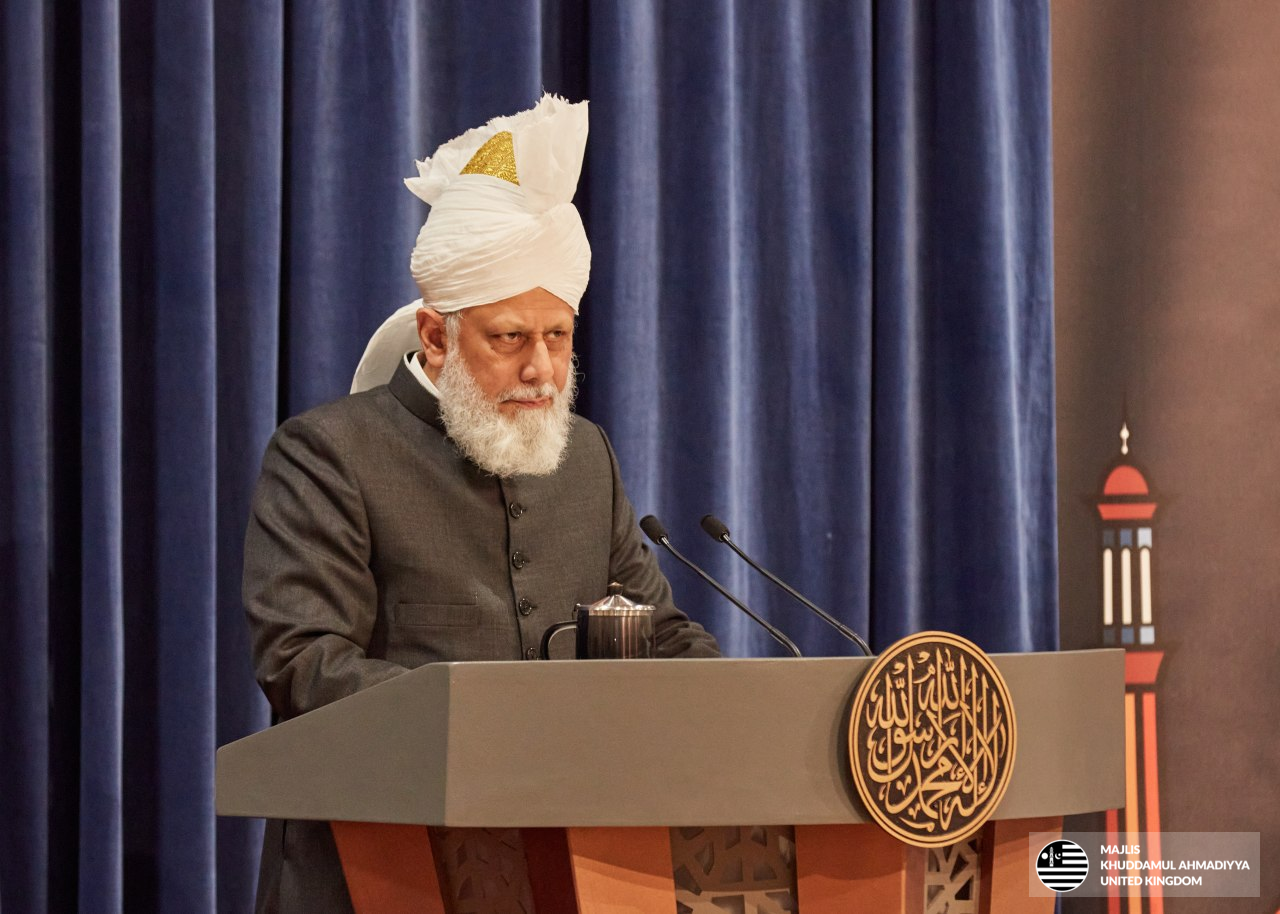
For Khuddam who are preoccupied in their work, their families or their friends, Salat often takes the back seat. Yet the Holy Prophet Muhammadsa warned that neglecting Prayer draws a person dangerously close to disbelief (Sahih Muslim, Kitab-ul-Iman). He also declared, “The comfort of my eyes is in Salat” (Sunan al-Nasai). This contrast is striking: what many see as a burden was the greatest source of peace for the Holy Prophetsa. The issue is not time, but priority.
The Promised Messiahas repeatedly emphasised that Prayer is the key to all good fortune and that its essence lies in heartfelt supplication, not empty form (Ruhani Khazain, vol. 3, p. 549; vol. 14, p. 241). Prayer without humility and concentration becomes a routine, but Prayer offered as if one stands before Allah transforms the soul. He warned that allegiance without fulfilling these obligations is of no benefit (Malfuzat, vol. 3, p. 627).
This condition also draws attention to tahajjud, the voluntary Prayer offered at night. Allah commands the Holy Prophet(sa),
وَمِنَ الَّیۡلِ فَتَہَجَّدۡ بِہٖ نَافِلَۃً لَّکَ ٭ۖ عَسٰۤی اَنۡ یَّبۡعَثَکَ رَبُّکَ مَقَامًا مَّحۡمُوۡدًا ﴿۸۰﴾
“And offer tahajjud with the recitation of the Qur’an in a part of the night as a supererogatory service for thee”
—(Holy Qur’an, Surah Bani Israil, 17:80).
Tahajjud demands sacrifice, but that sacrifice produces sincerity. The Holy Prophetsa described it as a means of nearness to Allah, protection from sin, and purification of the soul (Sunan al-Tirmidhi). The Promised Messiahas instructed that even two rak‘at, offered consistently, can awaken spiritual pain and devotion, which become the means of acceptance (Malfuzat, vol. 2, p. 182).
Sending durud upon the Holy Prophet Muhammadsa is another central pillar of this condition. Allah declares,
اِنَّ اللّٰہَ وَمَلٰٓئِکَتَہٗ یُصَلُّوۡنَ عَلَی النَّبِیِّ ؕ یٰۤاَیُّہَا الَّذِیۡنَ اٰمَنُوۡا صَلُّوۡا عَلَیۡہِ وَسَلِّمُوۡا تَسۡلِیۡمًا ﴿۵۷﴾
“Allah and His angels send mercy on the Prophet. O ye who believe! You also should invoke blessings on him”
—(Holy Qur’an, Surah al-Ahzab, 33:57)
The Holy Prophetsa promised that invoking blessings upon him brings Allah’s mercy tenfold (Sahih Muslim). The Promised Messiahas explained that no divine grace reaches a person without the intermediation of the Holy Prophetsa, and that abundant durud sets divine grace into motion (Al-Hakam, February 28, 1903).
Istighfar, seeking forgiveness, is described as spiritual strength training. Allah says,
فَقُلۡتُ اسۡتَغۡفِرُوۡا رَبَّکُمۡ ؕ اِنَّہٗ کَانَ غَفَّارًا ﴿ۙ۱۱﴾یُّرۡسِلِ السَّمَآءَ عَلَیۡکُمۡ مِّدۡرَارًا ﴿ۙ۱۲﴾وَّیُمۡدِدۡکُمۡ بِاَمۡوَالٍ وَّبَنِیۡنَ وَیَجۡعَلۡ لَّکُمۡ جَنّٰتٍ وَّیَجۡعَلۡ لَّکُمۡ اَنۡہٰرًا ﴿ؕ۱۳﴾
“Seek forgiveness of your Lord; for He is the Exceedingly Forgiving, He will send down rain for you in abundance, And He will strengthen you with wealth and with children, and He will give you gardens and He will give you rivers.”
—(Holy Qur’an, Surah Nuh, 71:11–13)
The Holy Prophetsa taught that istighfar provides a way out of difficulties and grants provision from unexpected sources (Sunan Abi Dawud). The Promised Messiahas explained that istighfar suppresses the roots of sin and restores the soul to purity and strength (Ruhani Khazain, vol. 12, pp. 346–347).
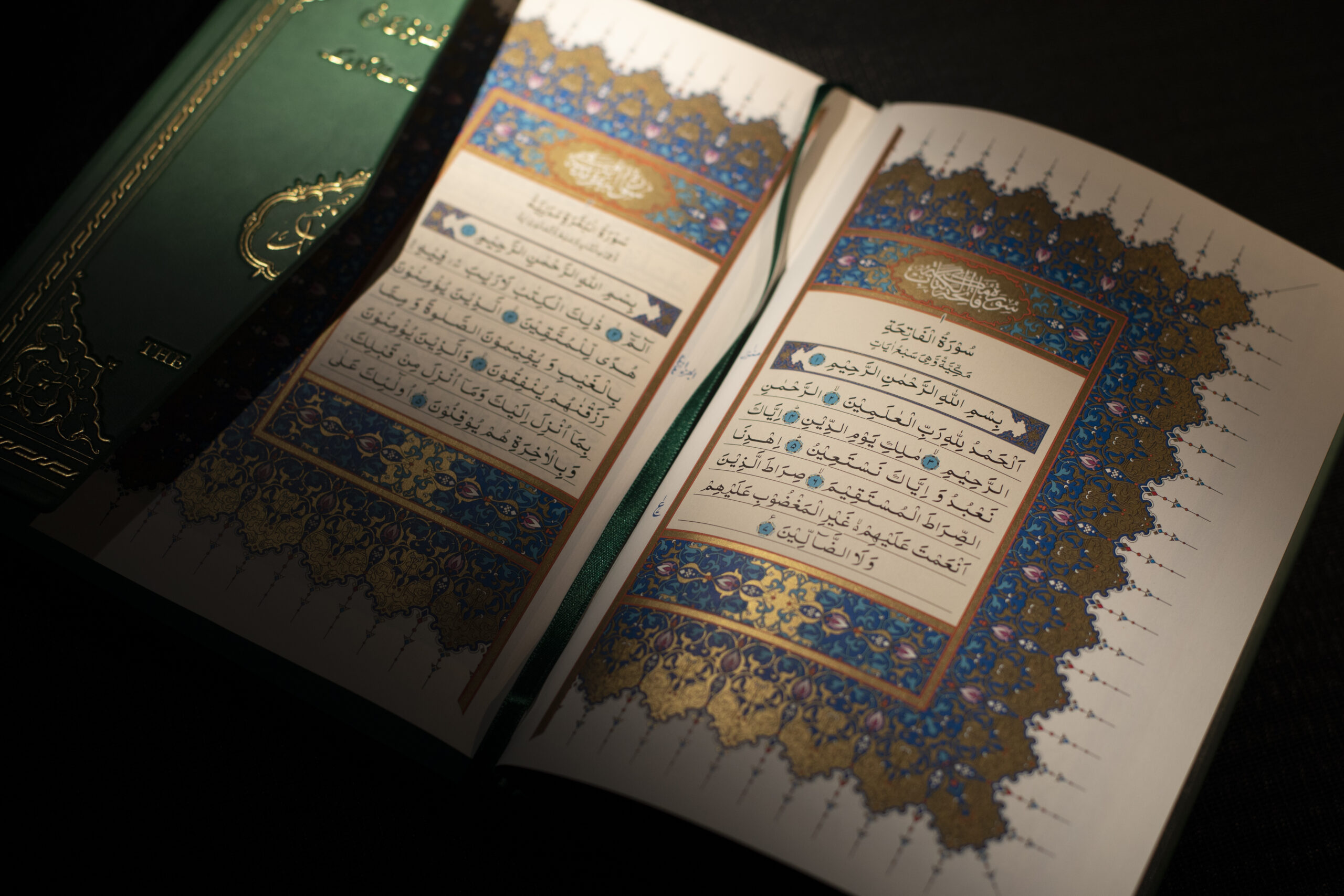
Finally, this condition calls us to gratitude. “All praise belongs to Allah, Lord of all the worlds” (Holy Qur’an, Surah al-Fatihah, 1:2). Gratitude is not words alone; it is recognising Allah as the source of every blessing and living accordingly. The Holy Prophetsa warned that any matter not begun with the praise of Allah remains deficient (Sunan Ibn Majah). The Promised Messiahas taught that true praise belongs only to Allah, as He alone possesses perfection in every attribute (Ruhani Khazain, vol. 15, pp. 598–602).
For Khuddam, this condition serves to draw their attention to the fundamentals of Islam. The five daily Prayers, tahajjud, durud, istighfar, and gratitude help to build a living relationship with Allah. To neglect them is to weaken our Bai‘at; to uphold them is to honour it.
“Taken from Conditions of Bai‘at & Responsibilities of an Ahmadi by Hazrat Khalifatul Masih Vaba.”
Editorial
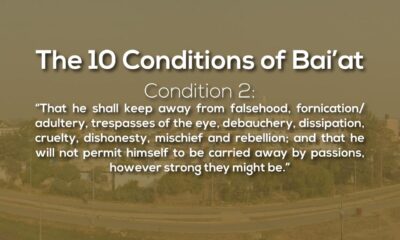
Condition 2 of Bai‘at
“The second condition of Bai‘at calls for truthfulness, moral restraint, chastity, and self-control, urging believers to live faith through upright conduct and action.”
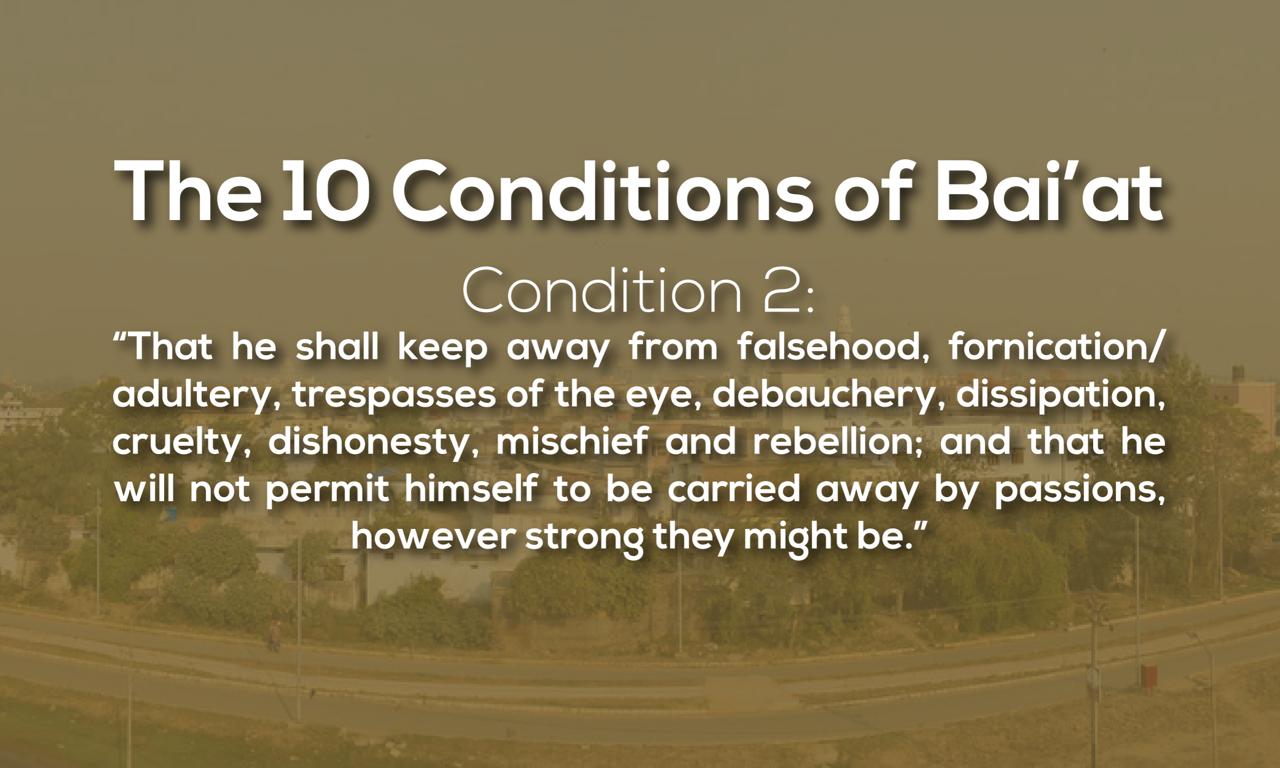
“That he/she shall keep away from falsehood, fornication/adultery, trespasses of the eye, debauchery, dissipation, cruelty, dishonesty, mischief and rebellion; and that he/she will not permit himself/herself to be carried away by passions, however strong they might be.”
At Jalsa Salana Qadian 2025, Hazrat Khalifatul Masih V(aa) instructed that the Ten Conditions of Bai‘at should be hung up in our homes and that we should strive to abide by them. This instruction shows us that we can’t just simply call ourselves Ahmadi Muslims; we have to show it by acting upon the conditions of Bai’at. For Khuddam, the second condition of Bai‘at provides a comprehensive moral framework governing speech, conduct, desire, and social responsibility.
The main focus of this condition is truthfulness. Falsehood is described as the greatest of evils because it is the root from which other sins grow. The Holy Prophetsa once advised a man who was burdened with many weaknesses to abandon falsehood alone, and through this commitment to truthfulness he was gradually freed from all other sins (Sahih Muslim, Kitab-ul-Birr).
This illustrates that truth acts as a moral anchor, ensuring that we don’t fall into other sins.
Allah the Almighty places falsehood alongside idol worship, highlighting its spiritual danger:
ذٰلِکَ ٭ وَمَنۡ یُّعَظِّمۡ حُرُمٰتِ اللّٰہِ فَہُوَ خَیۡرٌ لَّہٗ عِنۡدَ رَبِّہٖ ؕ وَاُحِلَّتۡ لَکُمُ الۡاَنۡعَامُ اِلَّا مَا یُتۡلٰی عَلَیۡکُمۡ فَاجۡتَنِبُوا الرِّجۡسَ مِنَ الۡاَوۡثَانِ وَاجۡتَنِبُوۡا قَوۡلَ الزُّوۡرِ ﴿ۙ۳۱
“That is the commandment. Whoso honours that which is declared sacred by Allah, may be sure that it counts for good with his Lord. Cattle are made lawful for you, except that which has already been announced to you in the Quran. Then shun the abomination of idols, and shun all words of falsehood,”
— (Holy Qur’an, Surah al-Hajj, 22:31)
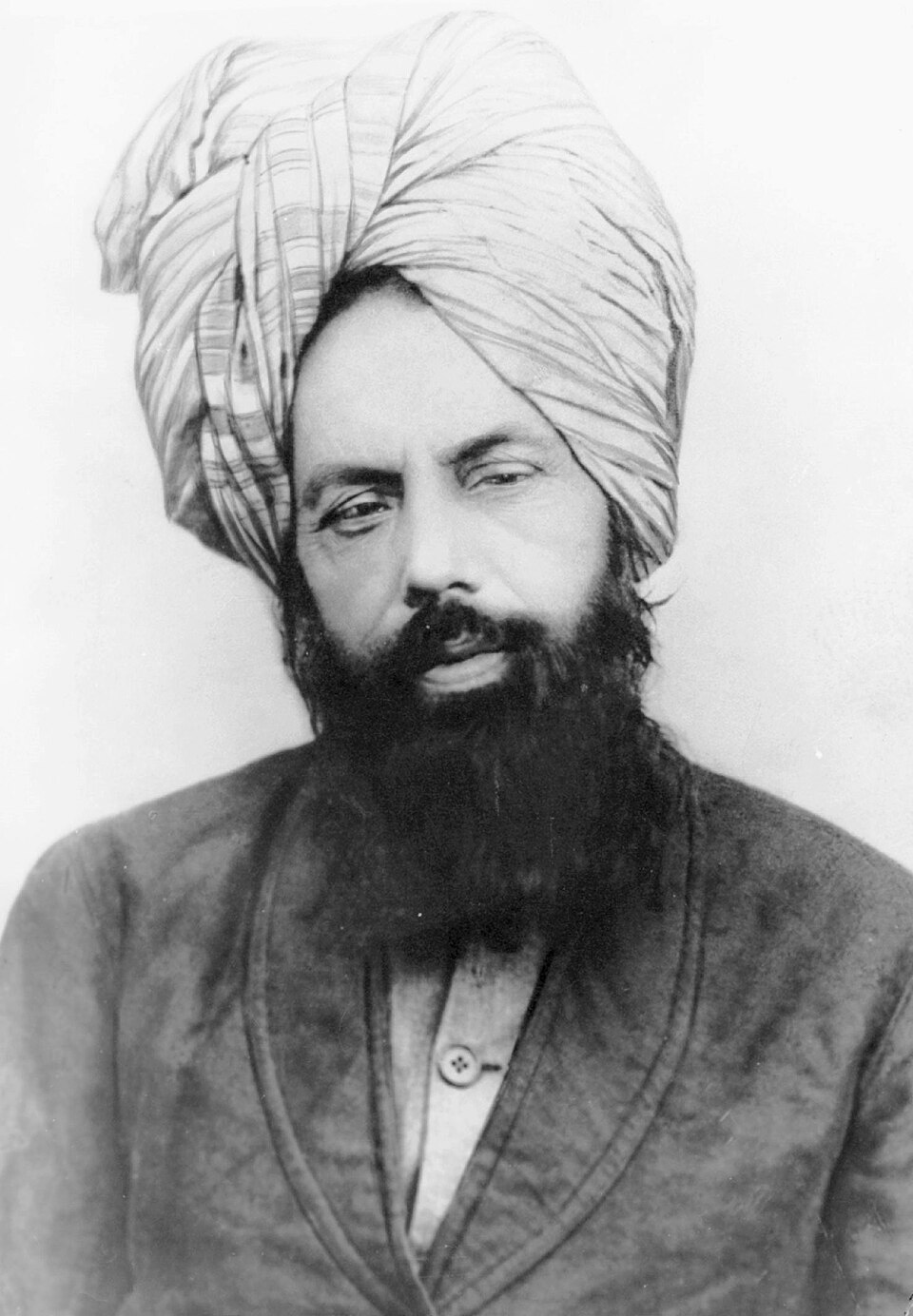
The Promised Messiahas explained that falsehood is like an idol because it has no reality behind it—only artificial polish. A person who becomes accustomed to lying gradually loses credibility, even when he later speaks the truth
— (Malfuzat, vol. 3, p. 350).
The second condition also commands chastity and moral restraint. Allah the Almighty states:
وَلَا تَقۡرَبُوا الزِّنٰۤی اِنَّہٗ کَانَ فَاحِشَۃً ؕ وَسَآءَ سَبِیۡلًا ﴿۳۳
“Do not even approach adultery; surely, it is a foul thing and an evil way.”
—(Holy Qur’an, Surah Bani Isra’il, 17:33)
Islam does not merely forbid the act itself but instructs believers to distance themselves from all paths that lead towards it. This principle is reinforced through guarding the gaze. Allah commands:
قُلۡ لِّلۡمُؤۡمِنِیۡنَ یَغُضُّوۡا مِنۡ اَبۡصَارِہِمۡ وَیَحۡفَظُوۡا فُرُوۡجَہُمۡ ؕ ذٰلِکَ اَزۡکٰی لَہُمۡ
“Say to the believing men that they restrain their eyes and guard their private parts. That is purer for them.”
—(Holy Qur’an, Surah al-Nur, 24:31)
The Holy Prophetsa taught that speaking truth, fulfilling promises, safeguarding trusts, lowering the gaze, protecting chastity, and refraining from cruelty are among the qualities that lead to Paradise (Musnad Ahmad ibn Hanbal, vol. 5, p. 323). Modesty, therefore, is a necessary quality every Khadim must have in order to fulfill the rights of Allah and His creation.
Cruelty, dishonesty, and mischief are also explicitly condemned in this condition. Cruelty includes injustice, abuse of rights, and harming others through words or actions. The Holy Prophet Muhammad(sa) warned that cruelty will appear as darkness on the Day of Judgement (Musnad Ahmad ibn Hanbal, vol. 3, p. 323). Dishonesty in dealings corrodes both faith and society, while mischief and discord destroy unity. Allah the Almighty declares:
وَلَا تَبْغِ الْفَسَادَ فِي الْاَرْضِ ۖ اِنَّ اللّٰهَ لَا يُحِبُّ الْمُفْسِدِيْنَ
“And seek not to make mischief in the earth; surely, Allah loves not those who make mischief.”
—(Holy Qur’an, Surah al-Qasas, 28:78)
The condition further warns against rebellion and being carried away by passion. The Promised Messiah(as) described unrestrained carnal desire as a devastating flood that cannot be resisted without the mercy of Allah (Barahin-e-Ahmadiyyah, vol. 5). Even Hazrat Yusufas) who was a role model of modesty, acknowledged human weakness, recognising that protection from such passions lies only in divine mercy.
(Holy Qur’an, Surah Yusuf, 12:54).
For Khuddam, this condition is deeply practical. It demands we always speak the truth, guard our eyes, be sincere in all our work, show patience and restraint in desire, and stay far away from rebellion. The Promised Messiahas envisioned a Jama‘at recognised by gentleness, moral excellence, and sympathy for mankind, serving as a living model of righteousness for the world
(Tabligh-e-Risalat, vol. 7, pp. 42–44).
If these words are displayed in our homes but not reflected in our lives, their purpose is lost. This condition calls for constant self-accountability, sincere prayer, and unwavering effort. By striving to live by these words, Khuddam don’t just refrain from sin; they start to show the qualities that define a true Ahmadi.
Taken from Conditions of Bai‘at & Responsibilities of an Ahmadi by Hazrat Khalifatul Masih Vaba.

Get the Tariq Magazine through your letterbox each month.

Faith, Palestine and the Path to Peace: An Open Dialogue with Sharif Odeh Sahib

A Spiritual and Moral Training