News
London Book Fair: Islam in the Media Panel Discussion
The London Book Fair 2023 is ago! Which means that thousands of publishers, printers, literary agents and authors are convening in Kensington, London to talk about books. AMYA UK is, for the first time, exhibiting at the Fair—the exhibition is centred around the Sunday Times bestselling book The Great Western Revival, the new edition of Life of Muhammad (peace and blessings of Allah be upon him) and a general introduction to the Jama’at.
Other than the exhibition the Isha’at department’s main objective is public engagement: talking to people in the book industry about Islam and what type of books would interest them.
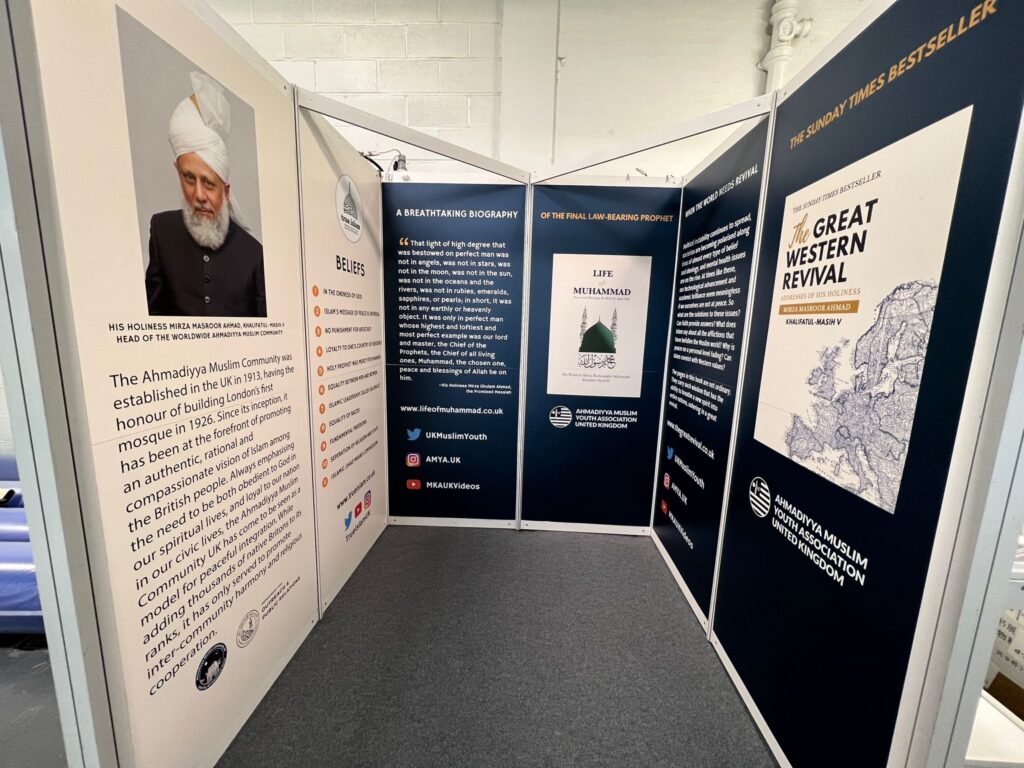
The Isha’at exhibition. Many people stop and look closely at the photo of Hazrat Khalifatul-Masih (aba) which begins a conversation on the Jama’at.
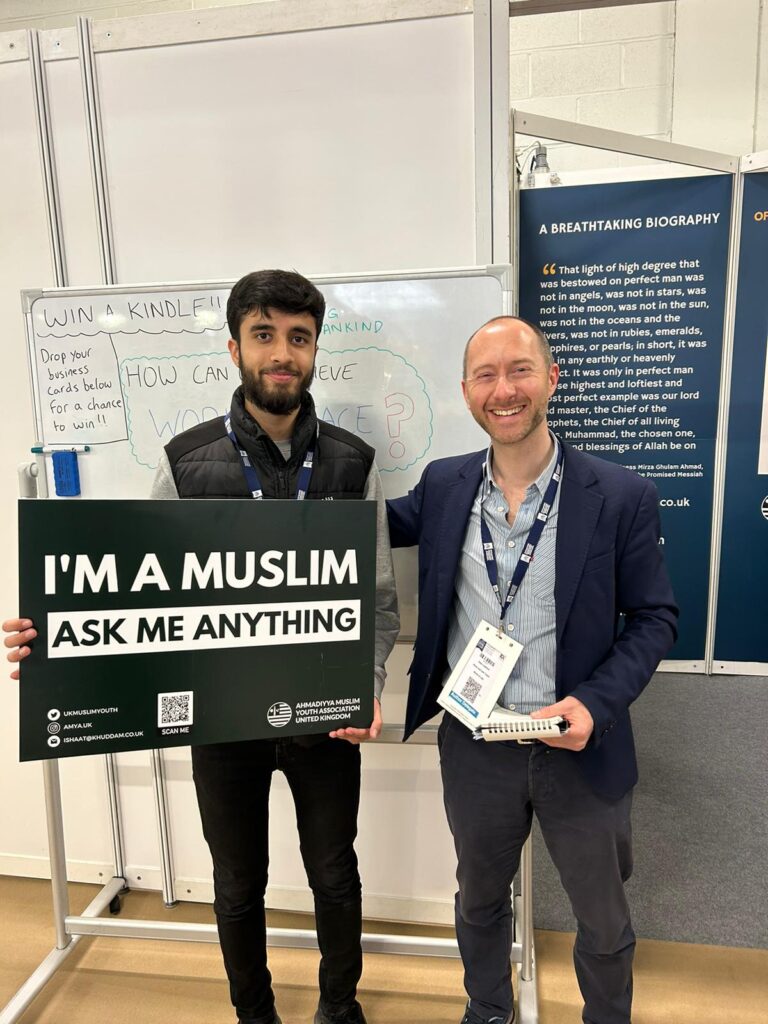
Wahid Khan, an Isha’at team member in the middle of a social experiment.
The first day of the three-day Fair began today (18 April 2023) with a lecture arranged by AMYA UK entitled Islam in the Media: Freedom of Expression. Three panelists were requested to host the 45 minute long talk. Leaflets about the discussion were given out by Khuddam around the conference room which resulted in many people attending the talk.
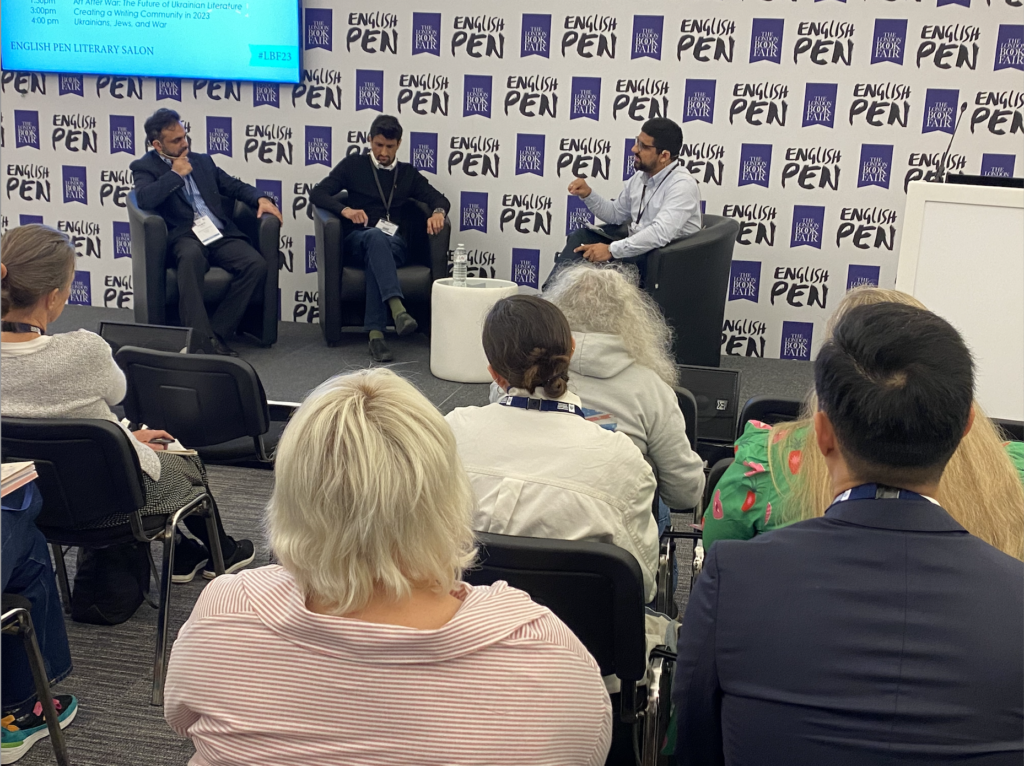
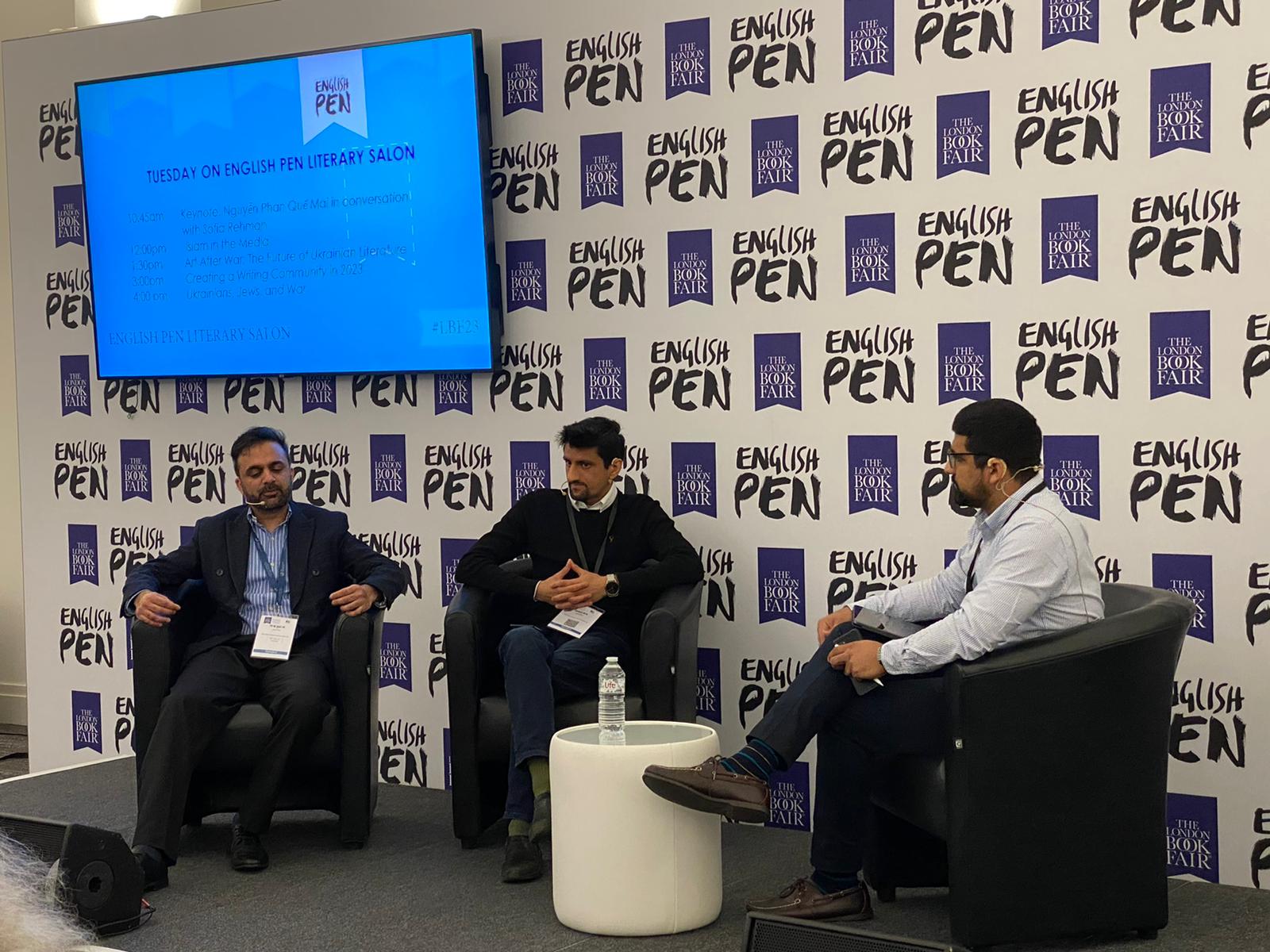
The three panellists on the stage at the English Pen Salon Room where the discussion took place. From right to left: Ataul Fattir Tahir (Host), Atif Rashid and Amer Safir.
The talk began with the host (Ataul Fattir Tahir: lecturer Jamia Ahmadiyya UK) introducing the panelists and asking that freedom of speech is accepted around the world. Are there any limits on it?
Atif Rashid (Jounralist and Editor in Chief the Analyst News): Yes it does. You cannot go around openly abusing and causing harm to people in the name of freedom of expression or speech. There is a fine line between criticising genuinely and trying to inflame the sentiments of others. No one would like their parents abused and everyone has feelings that ought to be respected.
Amer Safir (Editor in Chief Review of Religions): You don’t go around abusing people and the Islamic teachings on this are so beautiful that it says in the Holy Qur’an that do not ridicule the gods of others lest they ridicule Allah out of ignorance.
Host: Both of you are Muslims, you’ve worked on a lot of stories covering Islam in the media. How do you see Islam’s representation in the media today?
Atif Rashid: 0.5% of journalists are Muslims. How many stories of Islam are there? Quite a lot. How can there be a fair representation if it’s the case where there are so many stories on Islam yet the actual number of Muslim journalists are only a few?
I’m going to defend editors a bit. As a Muslim it is our job to put ourselves out there. How are editors going to get the idea as to what Islam is? Which editor has read the Qur’an front to back? We cannot expect the editor to know the ins and outs of religion. We have to approach them and correct their misconceptions. There was a study that ¾ of people in the West get information via the media. Everyone has unconscious bias which you should try to rid yourself of in journalism. But Islam is complicated today so editors do not always know what the true Islam is until and unless we as Muslims go out there and tell them.
Amer Safir: Whilst the media have a responsibility, we have a responsibility to get the message out. We have a responsibility to get out there. Most people are genuine law-abiding citizens they just have normal questions. I have read all of Suleman Rushdie’s books. I would not respond violently. It’s about how you respond as well. There is no justification for what’s happening in some muslim countries, but at the same time there are academic muslims who are not really promoted even though they are at the apex of their fields. There is a question of consistency as well that the negative view of Islam should not always be promoted.
Host: What do you think the role of social media is in challenging perceptions of Islam?
Atif Rashid: Muslim voices need to be amplified on social media. Muslim Communities should active on social media. For example, AMYA UK did flood relief efforts. I wrote the Daily Mail a letter saying this is a positive story that should be covered and explained how this represents the true Islam that most Muslims recognise. They covered the story and gave it a lot of publicity (which was surprising to me) but it goes to show if you approach the media and are continuous and don’t give up you will break through and be able to challenge the negative perceptions of Islam.
Amir Safir: So social media is really powerful. I did a tour of America where me and my team took a board out onto the road that said “I am a Muslim ask me anything” and recorded the responses and interactions that people had with us. That turned into an amazing Youtube video that had over a million views. Similarly close to the Westminster Bridge attacks, we got 300 t-shirts made that said the same words on them and we along with AMYA UK went to Central London. This was a really successful initiative and it went viral and people on the ground approached us and asked questions and we had the opportunity to have genuine conversations with people. That was well promoted on social media as well.
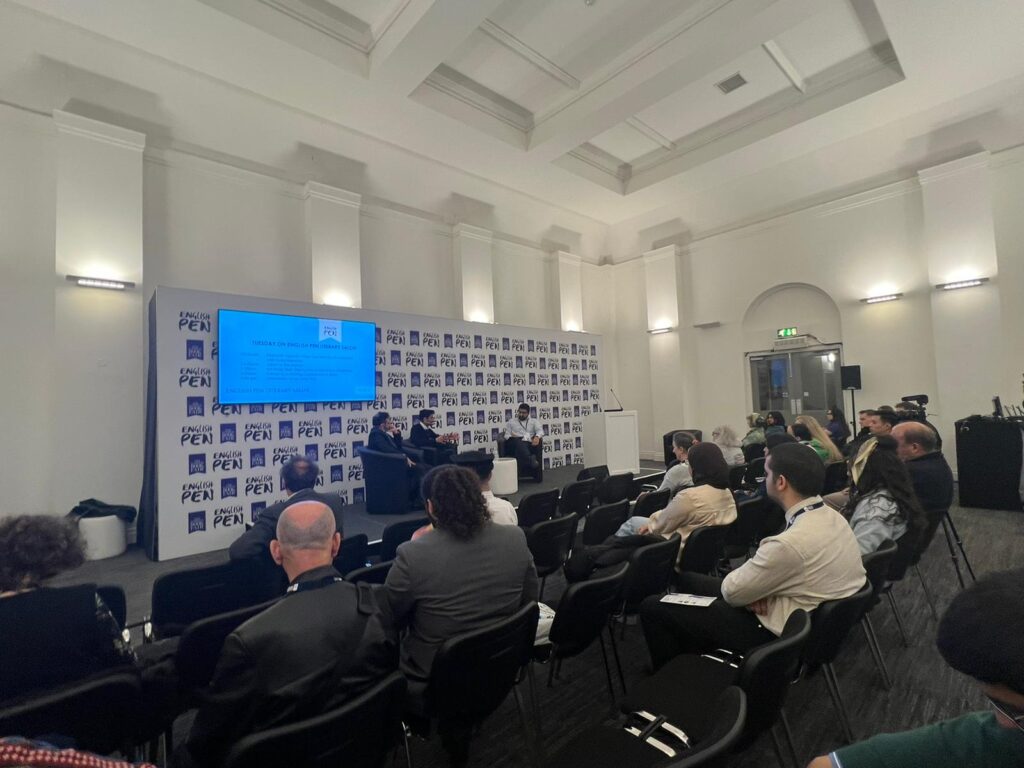
Throughout the discussion the audience was glued to the stage and listened intently to the panellists.
Host: Why is it that Muslims are the most sensitive people when it comes to Freedom of Speech?
Atif Rashid: I would not accept that premise. If you look at anything like the Jewish community they will speak up about anything that is against them and they actively and rightfully fight their corner. Editors are scared to get something wrong. There is an effort to ensure the truth gets out. All communities push for their voice to be heard and it’s not just Muslims.
Amir Safir: Most Muslims are peace loving. Just like Christianity, in Islam there are lots of different sects. Muslims should respond through the pen, by writing not through violence. As long as they do that and do not cross the bounds of tolerance and respect, it is fine. The Ahmadiyya Muslim Community was founded for this very purpose to bring back the version of Islam that is truthful, logical, spiritual and scientific. There’s a saying that swords can win territories but pens can win hearts. [Shouted out by a member of the audience!] It is a complete misconception that Islam was spread by the sword. There is a revision of history as to how Islam has been depicted. That is what the Review of Religions is trying to resolve.
Host: How can people criticise Islam?
Atif Rashid: I think it comes down to intention. There is a fine line between criticism and mockery. There was a case in Austria where a woman hurt the sentiments of Muslim and she was punished by the courts even after appealing to the European Court of Human Rights which said that her statement was designed to cause pain, so she was punished. This shows that if you go out offending then you cannot live in a society with others. Why do something to upset people and to abuse them. There is a responsibility there.
Amir Safir: As a Muslim you have a right to freedom of speech. You have responsibility as well. Islam does not ordain any punishment for such things. The Holy Prophet Muhammad (sa) was cursed and abused and had to face all sorts of slander but he never responded in kind. Whenever he responded with the sword he did it to protect all religions. There is a different between freedom to insult and freedom to express. You can criticise all you want but what purpose does it serve.
At the end of the panel discussion the floor was opened for questions. The first question came from a lady who asked: what advice would you give to authors about Islam and how do we challenge that negative narrative?
Atif Rashid: I had this dilemma when I was growing up. The only way to respond is to start writing. Everyone can write a blog. Try to get into academia and journalism. In a lot of organisations there is a lot of talk about diversity and inclusion. There are opportunities there. We live in great country, we have really good freedom of speech and are lucky here. Talk to other people who have done it. Muslims should be helping each other as well.
Amir Safir: Don’t give up. You might not get it in the first attempt. Some of the most influential people today are those who have created their own content. Whilst you are exploring the traditional side of things you can create a forum to bring out your own content. If you keep going to different places you will get noticed. Don’t give up. There are opportunities available now.
Question: Tiktok, when it comes to social media, is usually the first port of call, then traditional media catches up. What is the role of traditional media in the next generation?
Atif Rashid: I think traditional media is late around the curve. They are understanding they are loosing audiences and they are moving up slowly towards catching up with others. But definitely they have realised now that they should be ahead of the curve and really embrace new platforms.
This ended the discussion owing to time.
Feedback: a number of people spoke to the team and panellists at the end:
- A lady said that she wished there would have been more time given to this topic as it was so interesting.
- A young man came to meet the panel at the end and said he was writing a novel on the Iraq War and wanted help on how to publish and how Islam should be portrayed.
- A lady (Second year university student) said: the point that it is not just the Muslim Community which is overly sensitive when it comes to freedom of speech and that we should not get defensive about this. All communities raise their voices when they are hurt.
- Another lady who was a Muslim said that it was really good to see Muslims tackling this topic. She expressed that she was a Muslim but did not like to tell people as she felt uncomfortable, but seeing young Muslims openly wearing it on their sleeve was motivating.
News
A Spiritual and Moral Training
News
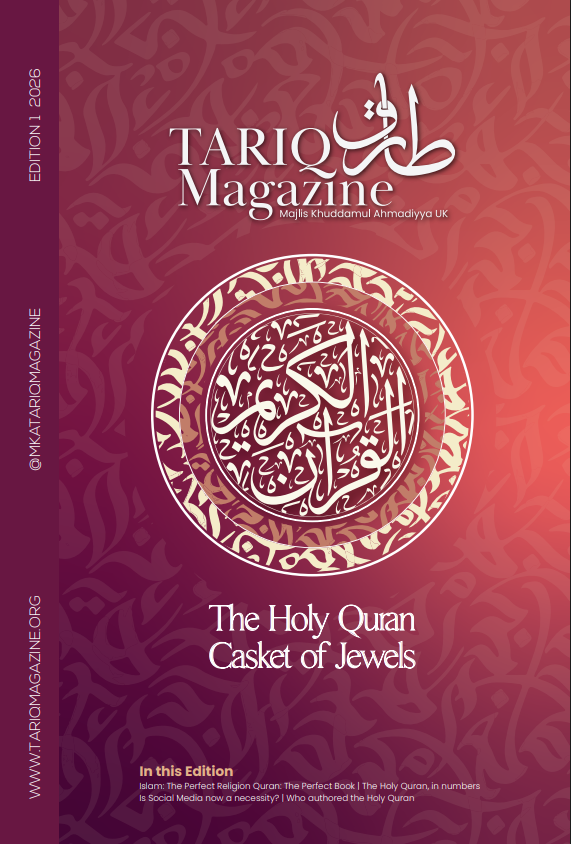
The Holy Quran – A Casket Of Jewels
Continue Reading
To read the rest of this article, subscribe to Tariq Magazine’s new and upcoming edition.
News
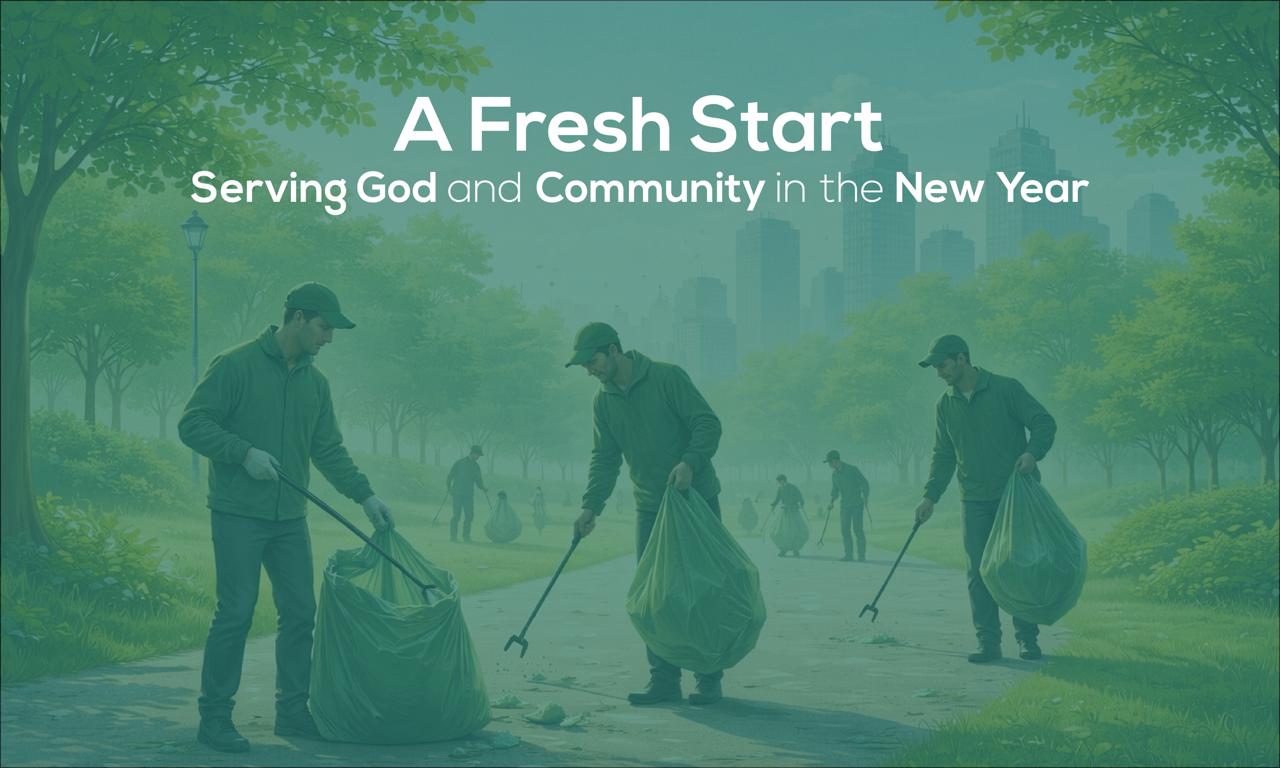
A Fresh Start: Serving God and Community in the New Year
Begin the new year with Tahajjud, turn prayer into action, and serve your community through the New Year Clean-Up with sincerity and purpose.
The Holy Qur’an states:
اِنَّ اللّٰہَ یُحِبُّ التَّوَّابِیۡنَ وَیُحِبُّ الۡمُتَطَہِّرِیۡنَ ﴿۲۲۳
“Surely, Allah loves those who turn to Him and loves those who keep themselves clean.”
— Surah Al-Baqarah 2:223
As one year ended and another began, the world welcomed 2025 with celebrations, fireworks, and fleeting resolutions. Yet for many, the new year began differently — with service, discipline, and faith. Instead of idle promises, Khuddam and Atfal of the Ahmadiyya Muslim Community took to the streets, giving their neighbourhoods a fresh start.
Their actions served as a reminder that faith is not merely spoken, but lived — and that service to humanity is a reflection of devotion to Allah.
Cleanliness in Islam is not simply about appearance; it is an expression of faith and care for society. The Holy Prophetsa said:
“Removing harmful things from the road is charity.”
— Sahih Bukhari 2989, Sahih Muslim 1009
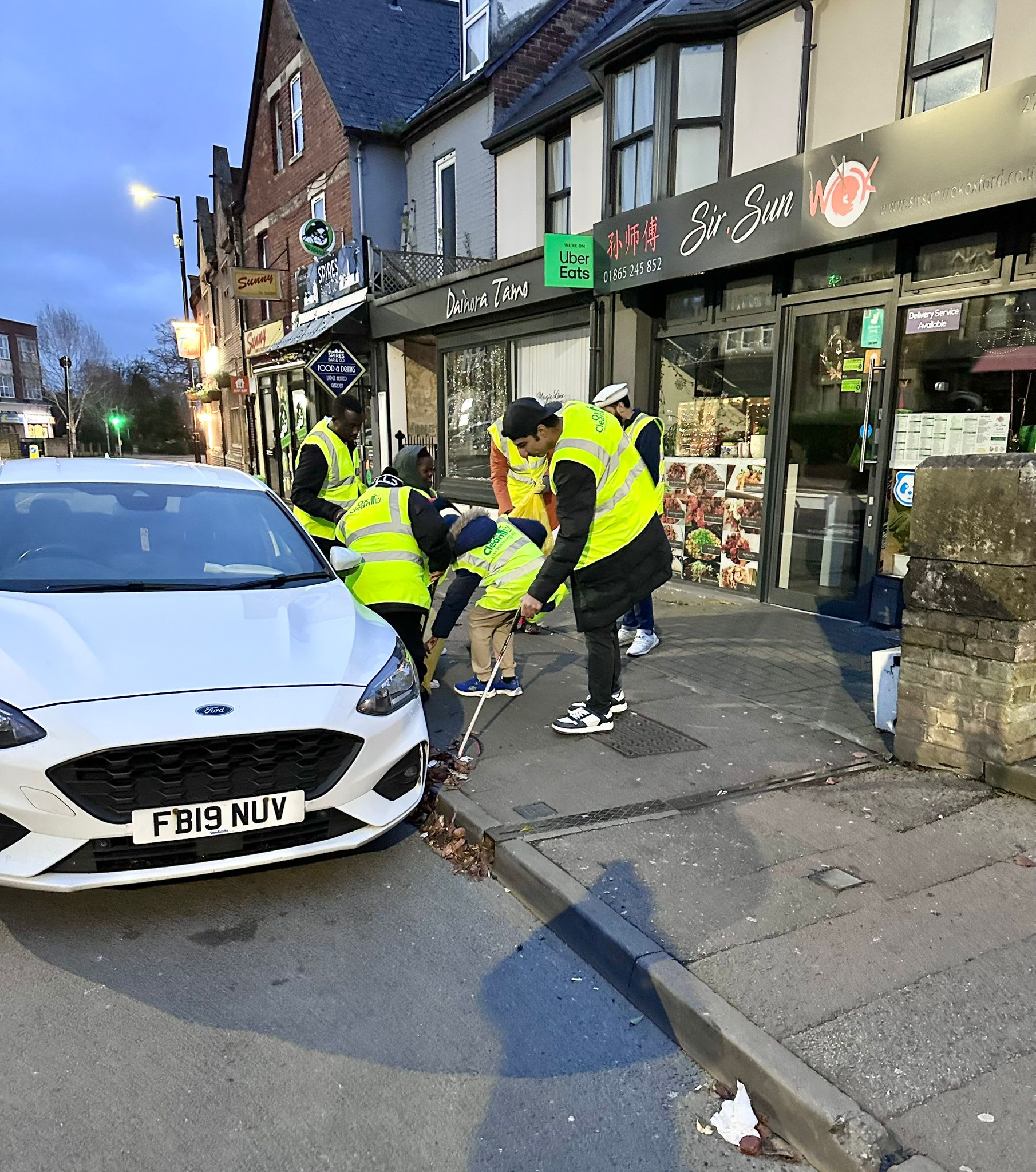
Every piece of litter collected and every street restored became an act of charity — a practical demonstration of spiritual values. The Promised Messiahas reminded his followers:
“Each day, every person should analyse himself and see to what extent he is concerned for the wellbeing of others and to what extent he shows love and compassion to his brothers.”
From the crack of dawn, volunteers swept, cleaned, and collected litter — displaying devotion not only in words, but through visible action that benefitted the wider community. Streets in Bordon, Oxford, Epsom, Stevenage, Luton, Watford, and many other towns across the UK were transformed by the energy and dedication of young volunteers.
Across the country, 1,828 volunteers dedicated 2,758 man-hours, collecting 493 bin bags of litter from 83 locations — a clear indication of both scale and commitment.
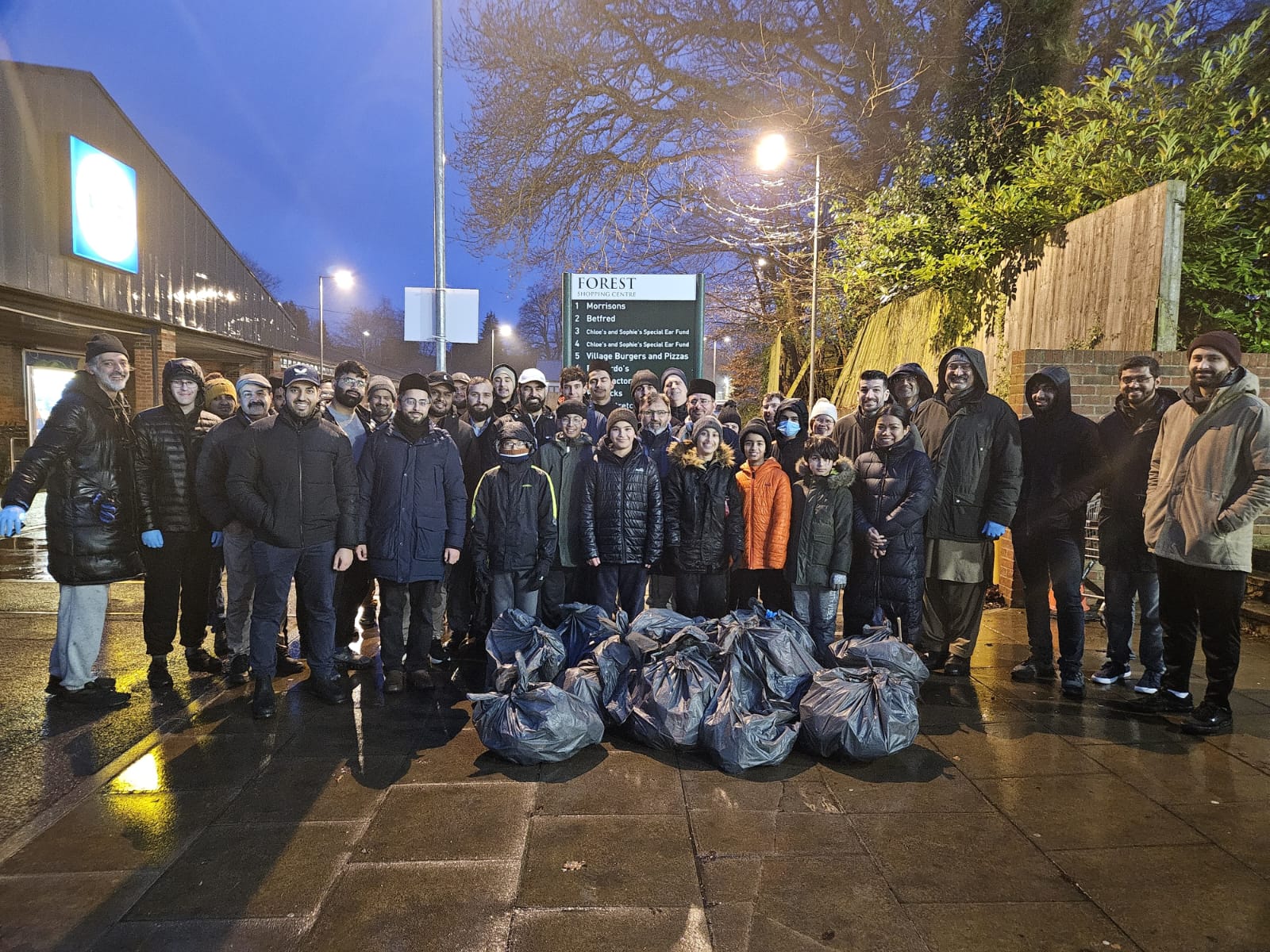
Abdul Quddus Arif Sahib, National President of MKA UK (2018–2025), explained the purpose behind the initiative while speaking to The Independent:
“The New Year Street Clean-Up is just one example of the initiatives the Ahmadiyya Muslim Youth Association has been organising for over a decade to serve the community and country we proudly call home. From street clean-ups to various charitable efforts, our youth are committed to giving back.”
The effort received widespread recognition across national and local media, reflecting both its reach and impact.
The Independent reported:
“Members of the Ahmadiyya Muslim community collected hundreds of bags of litter in towns and cities across the UK as part of an annual New Year clean-up, with more than 1,700 people taking part in the initiative across major cities including London, Glasgow, Liverpool and Manchester.”
ITV News Meridian highlighted:
“Volunteers were out early on New Year’s Day with litter-pickers and bin bags, helping to tidy up neighbourhoods and showing community spirit in action after the night’s celebrations.”
Epsom & Ewell Times observed:
“As the first light of the new year stretched across the horizon, volunteers worked together to breathe new life into their community, with litter cleared from the streets and passers-by stopping to thank them and wish them a happy new year.”
The Comet (Stevenage) stated:
“Young Muslims in Stevenage kicked off 2025 by cleaning up the town’s streets, continuing a New Year tradition focused on community care and civic responsibility.”
Luton Today reported:
“Volunteers in Luton began the new year by cleaning Britain’s streets, helping to restore public spaces and start 2025 with a positive contribution to the local community.”
Watford Observer noted:
“Young Muslims were seen cleaning Watford’s streets on New Year’s Day, continuing an annual effort to improve local areas and give back to the wider community.”
A regional roundup by Khuddam.org.uk added:
“Across the Middlesex region, volunteers marked the start of 2025 with community service, clearing litter from multiple town centres and leaving local areas visibly cleaner after the festive period.”
In Doncaster, Bilal Mahmood, Sadr Jama’at Doncaster, shared with the Doncaster Free Press:
“Starting the new year with prayer and service reflects our values as a community.”
He added:
“It is with this spirit that we begin the new year, as a reaffirmation of our commitment to both worship and selfless service. By fostering goodwill and positivity, we seek to make meaningful contributions to society. Our heartfelt prayers are for a world blessed with lasting peace, universal justice, and shared prosperity.”
The spiritual benefits of such service are clear. The Promised Messiah(as) taught that service to mankind is inseparable from service to Allah:
“The principle to which we adhere is that we have kindness at heart for the whole of mankind.”
By giving their time and energy, Khuddam and Atfal not only improved physical spaces but also strengthened character. The Holy Prophet(sa) said:
“The best among you are those who have the best manners and character.”
— Sahih Bukhari 3559
When young people take responsibility for their communities, faith becomes something practical. The New Year Clean-Up demonstrated that simple actions, carried out with sincerity, can have a lasting impact.
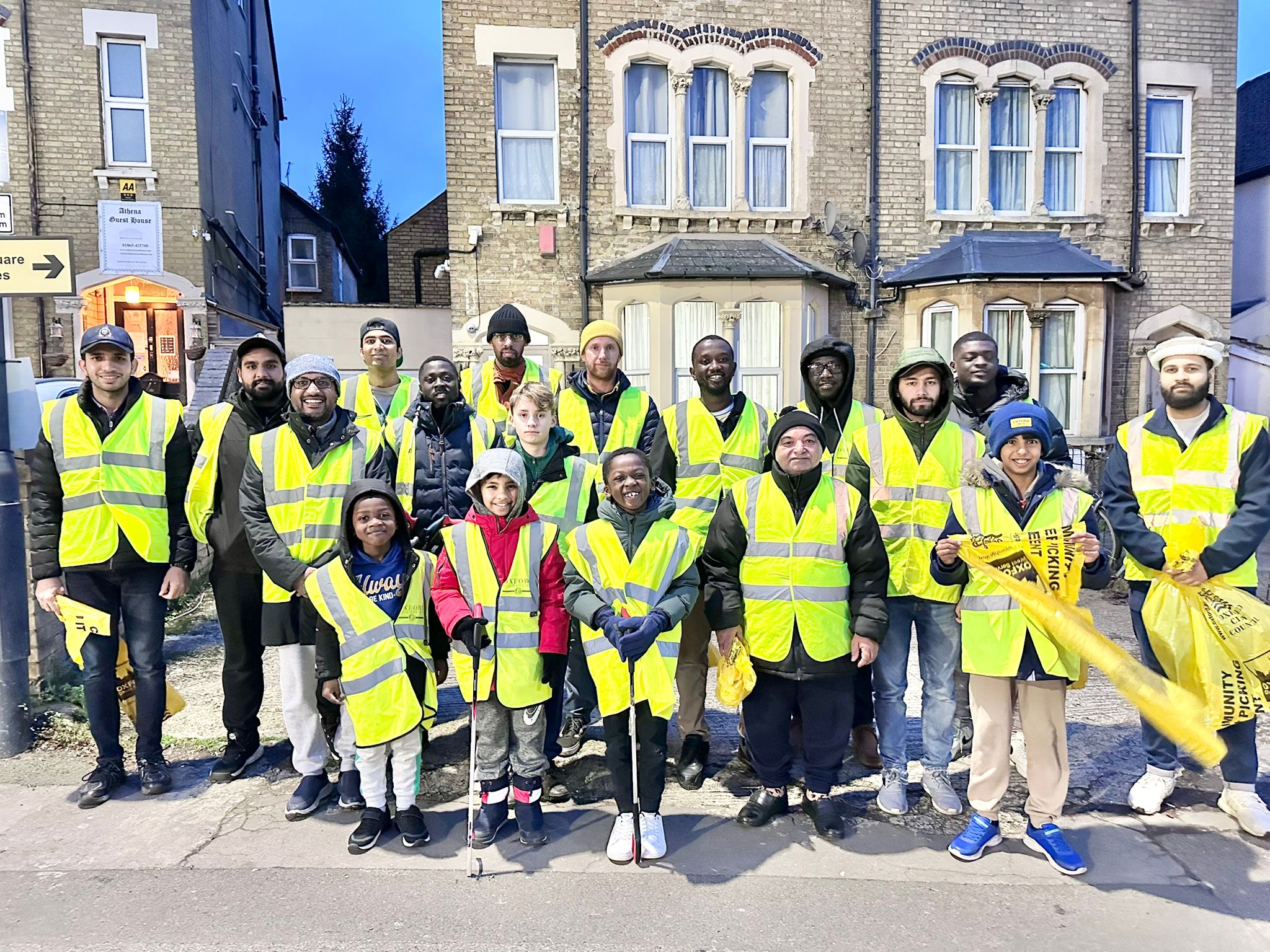
This initiative shows that making a difference does not require special resources or long preparation — only willingness. By giving a few hours of their time, Khuddam and Atfal improved public spaces and represented the values of Islam through action.
The New Year’s Clean-Up of 2025 was not just a routine activity, but a clear example of youth stepping forward with purpose. As the year begins, it stands as a reminder that serving others is both a responsibility and a means of strengthening society and faith.
A guide for the New Year
- Begin the new year with Tahajjud at your local mosque
- Turn prayer into action by serving your community
- Give a few hours to the New Year Clean-Up
- Make a real difference through simple, sincere service
May Allah enable you all to do so, Ameen.
Get the Tariq Magazine through your letterbox each month.

A Spiritual and Moral Training

The Holy Quran – A Casket Of Jewels


