Uncategorized
The Iconic Tarbiyyati Class Begins—and Yes it is Life Changing
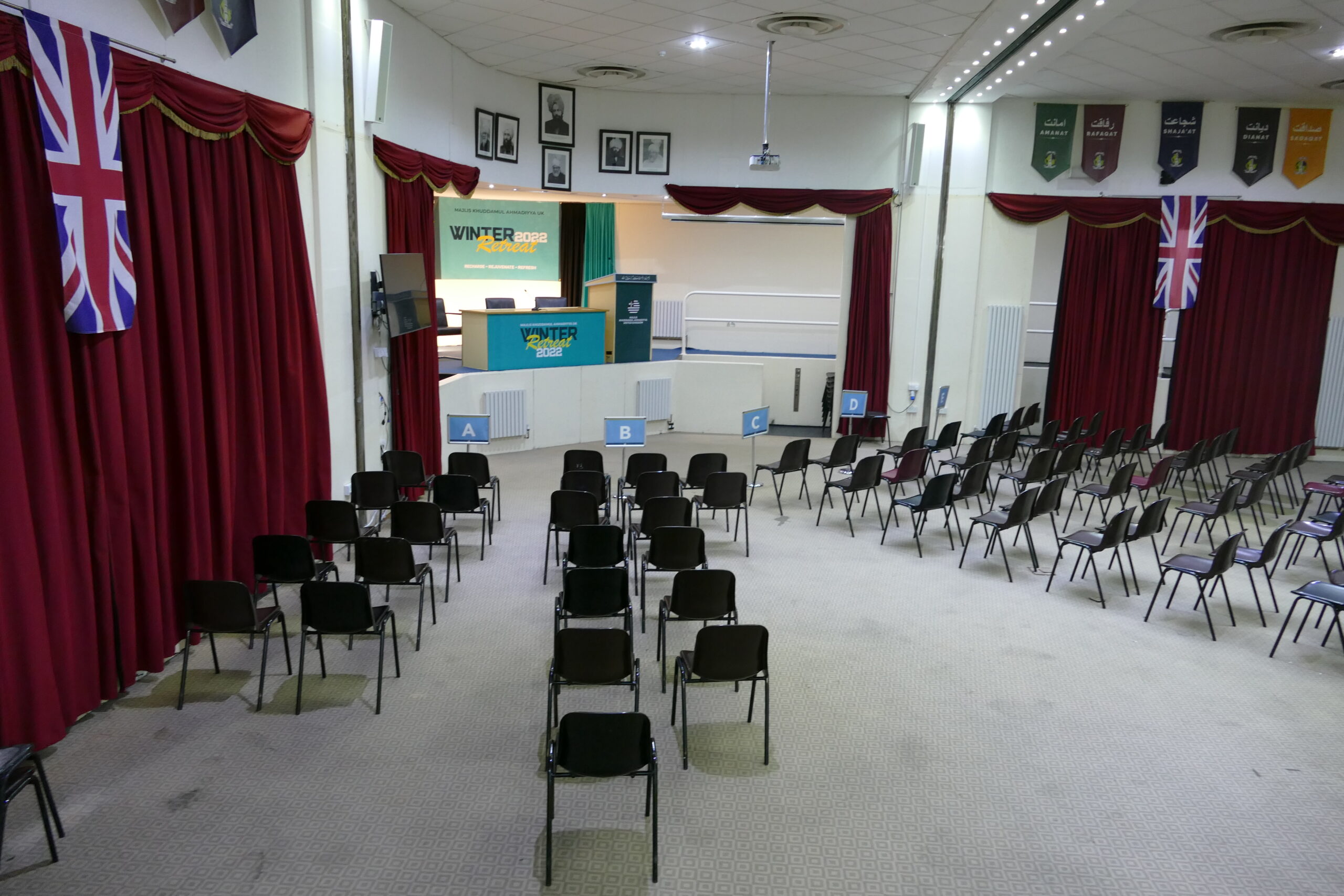
The iconic Khuddamul Ahmadiyya tarbiyyati class started yesterday with 100 young Khuddam and Atfal arriving to begin the week-long retreat at Jamia Ahmadiyya UK. The history of this class goes back decades with many Khuddam having been once part of it. The tarbiyyati class is no ordinary retreat, it is life changing. The effect that one week of regular tahajjud (voluntary prayer offered during the night), regular congregational prayers and regular recitation of the Holy Qur’an has upon an individual is truly immense. Attendees go back having been rejuvenated through a spiritual programme. Students are also sent to offer Fajr prayers behind Hazrat Khalifatul-Masih V (aba) at Islamabad, something which further enhances the spiritual benefit of the class.
Some of the tarbiyyati classes in the UK, that were held previously, were graced with the presence of Hazrat Khalifatul-Masih IV and Hazrat Khalifatul-Masih V. Though these classes have been taking place for a long time, it was only recently that the week long retreat, under the guidance of Hazrat Khalifatul-Masih V (aba) at Jamia Ahmadiyya UK began. Immediately it was a huge success. Those attending went back with a renewed approach to life, with many applying to become Murrabis in Jamia Ahmadiyya. This was almost 10 years ago. Today, some of those students who attended the first week-long retreat are serving in the field as missionaries.
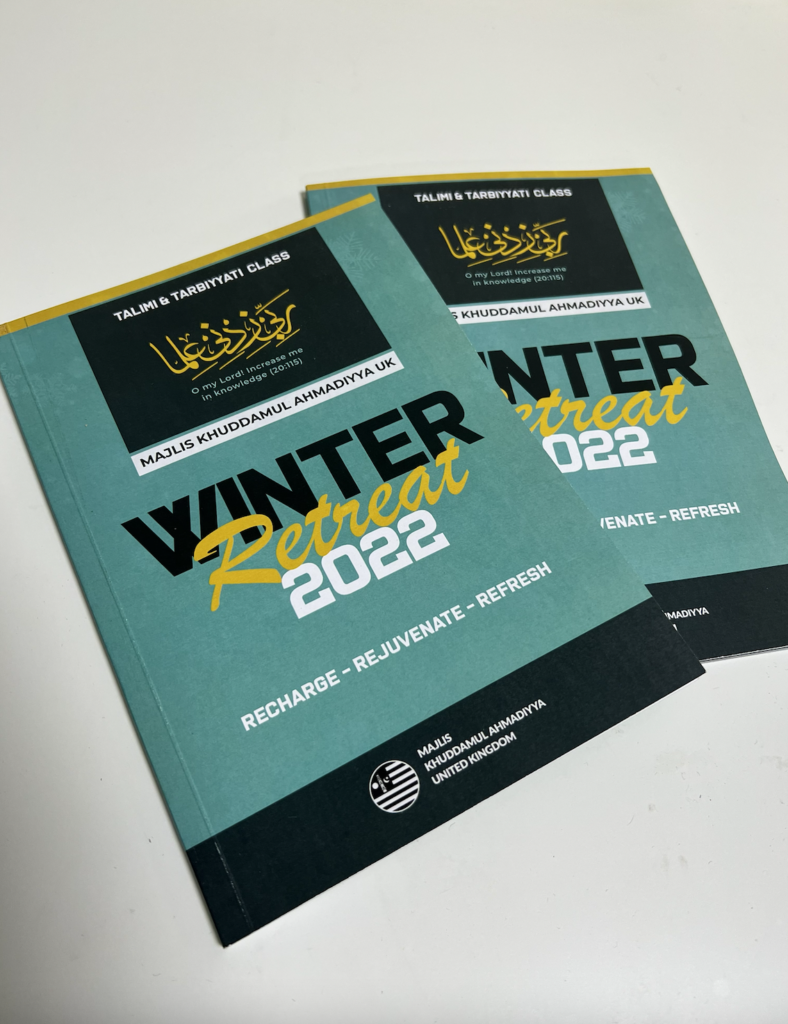
The study pack given to every student at this year’s Winter Retreat.
This year the focus is on 14-16 year olds. A custom curriculum tailored to the subjects and topics of discussion for that particular age-group has been formed and is being delivered. The classes are divided based on academic ability and an effort is made to maximise the time every Tifl and Khadim is here for.
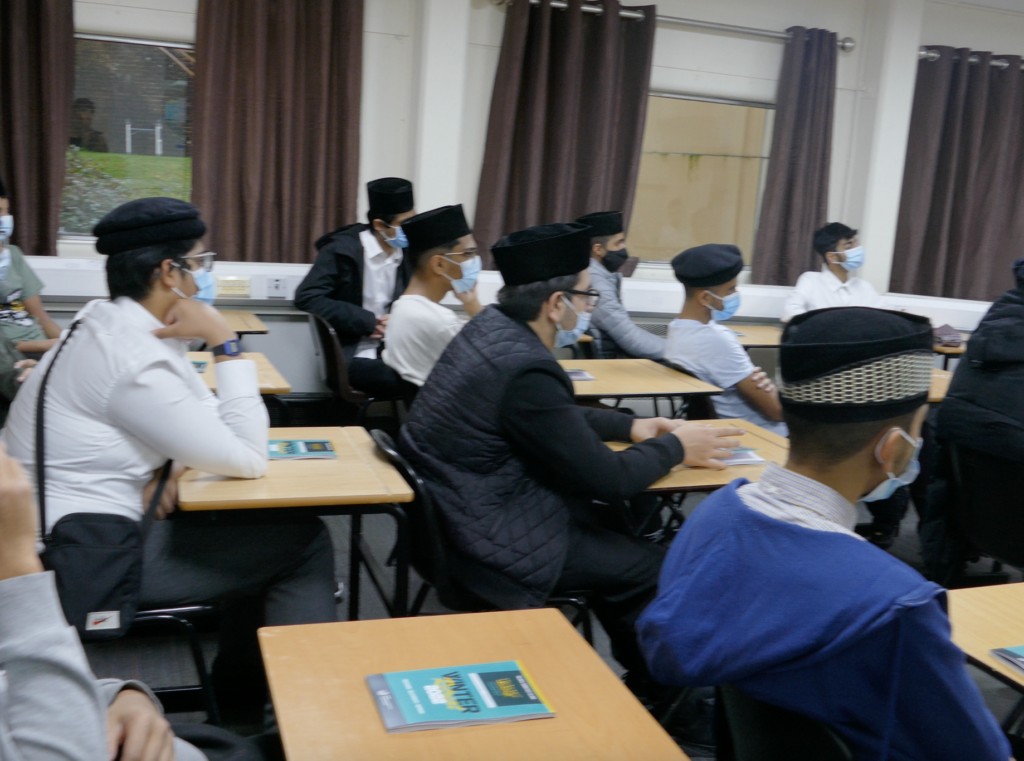
Students in the middle of a lesson at Jamia Ahmadiyya UK.
Nazime-Ala, Atif Khalil who is serving as Naib Sadr Majlis Khuddamul Ahmadiyya UK and is leading the retreat said: “Atfal and Khuddam are taking time off their holidays to come here and spend time which will hopefully recharge them and refresh them. In the past it has been a life changing experience for many of them and that is what we are trying to achieve.”
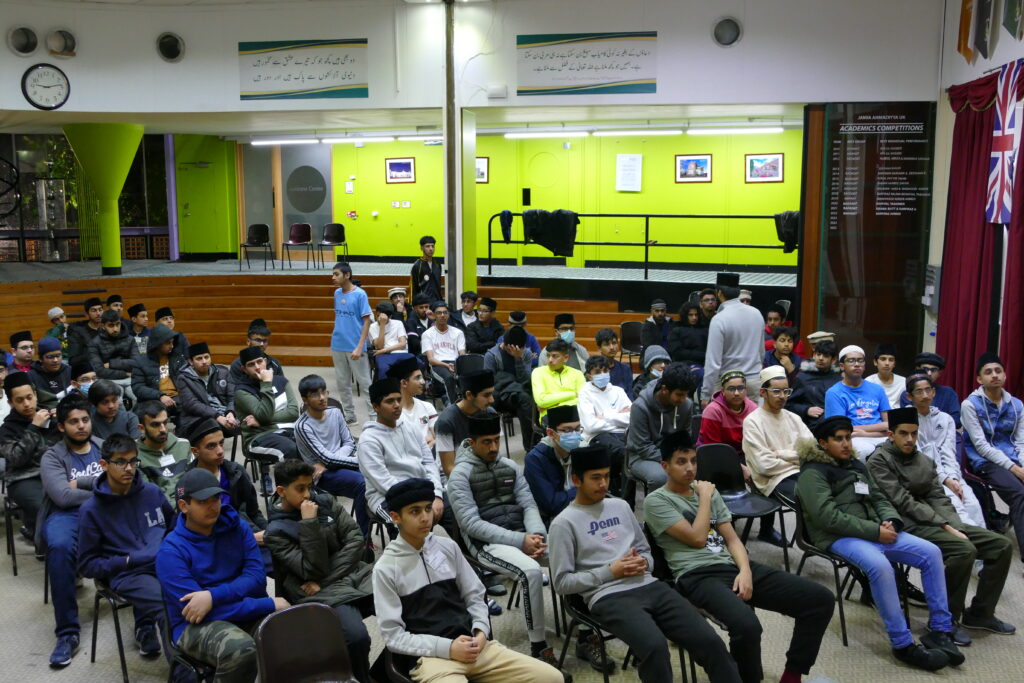
Every evening a guest is invited to deliver a lecture before the students on topics which they will encounter in their daily lives.
Apart from a spiritual programme of prayers, another special aspect of the class is mentoring. This takes place in small groups with a Jamia student leading a discussion on different topics. This is an ideal opportunity for youngsters to ask questions and discuss matters on their. The mentoring element of the class has been one of the most successful as it has proven to be an ideal method to deliver Tarbiyyat.
With the class having just begun, Inshallah, the organisers hope to inspire another cohort of young Muslims under the guidance of Hazrat Khalifatul-Masih V (aba).
Editorial
Conditions of Bai’at: Condition 4, cause no harm
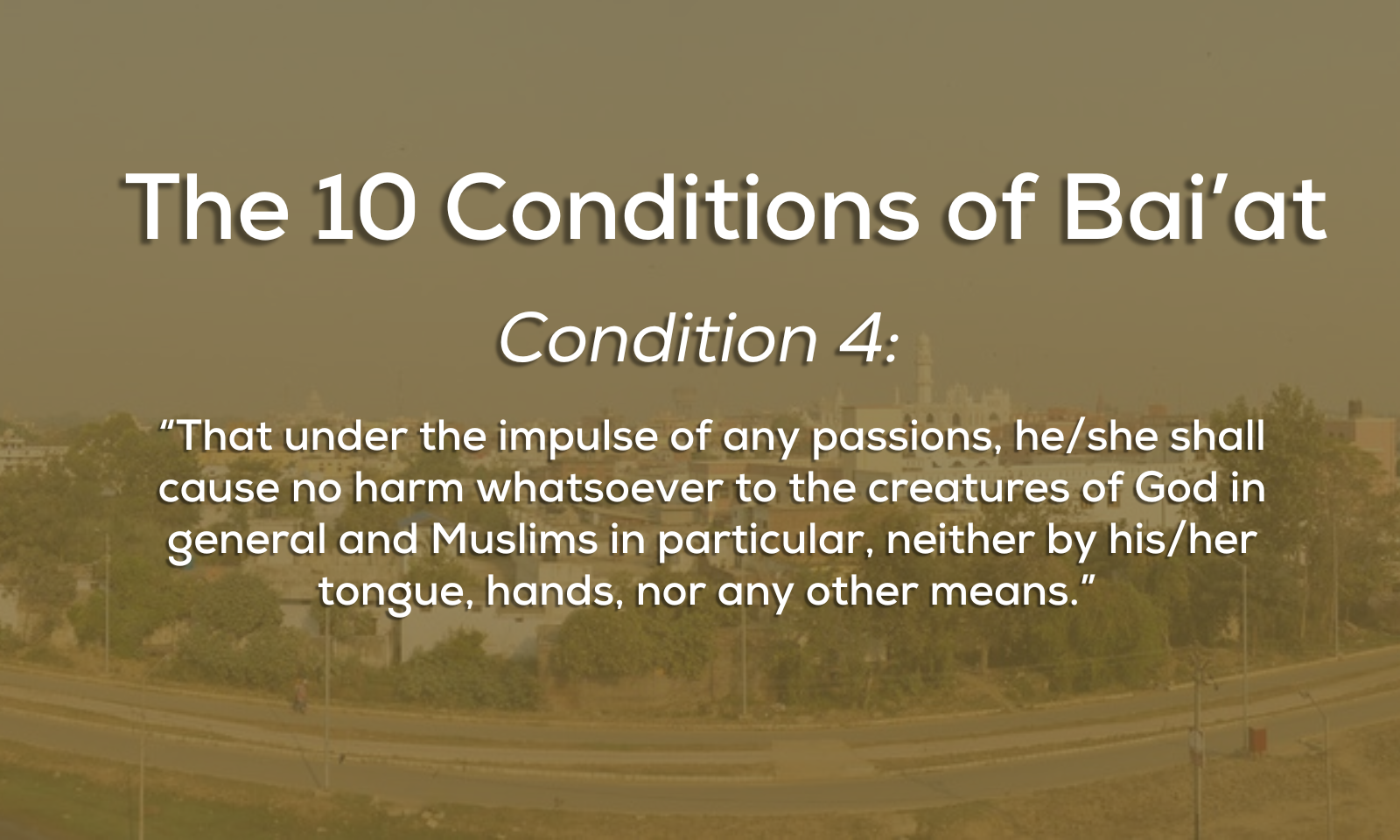
“That under the impulse of any passions, he/she shall cause no harm whatsoever to the creatures of God in general and Muslims in particular, neither by his/her tongue, hands, nor any other means.”
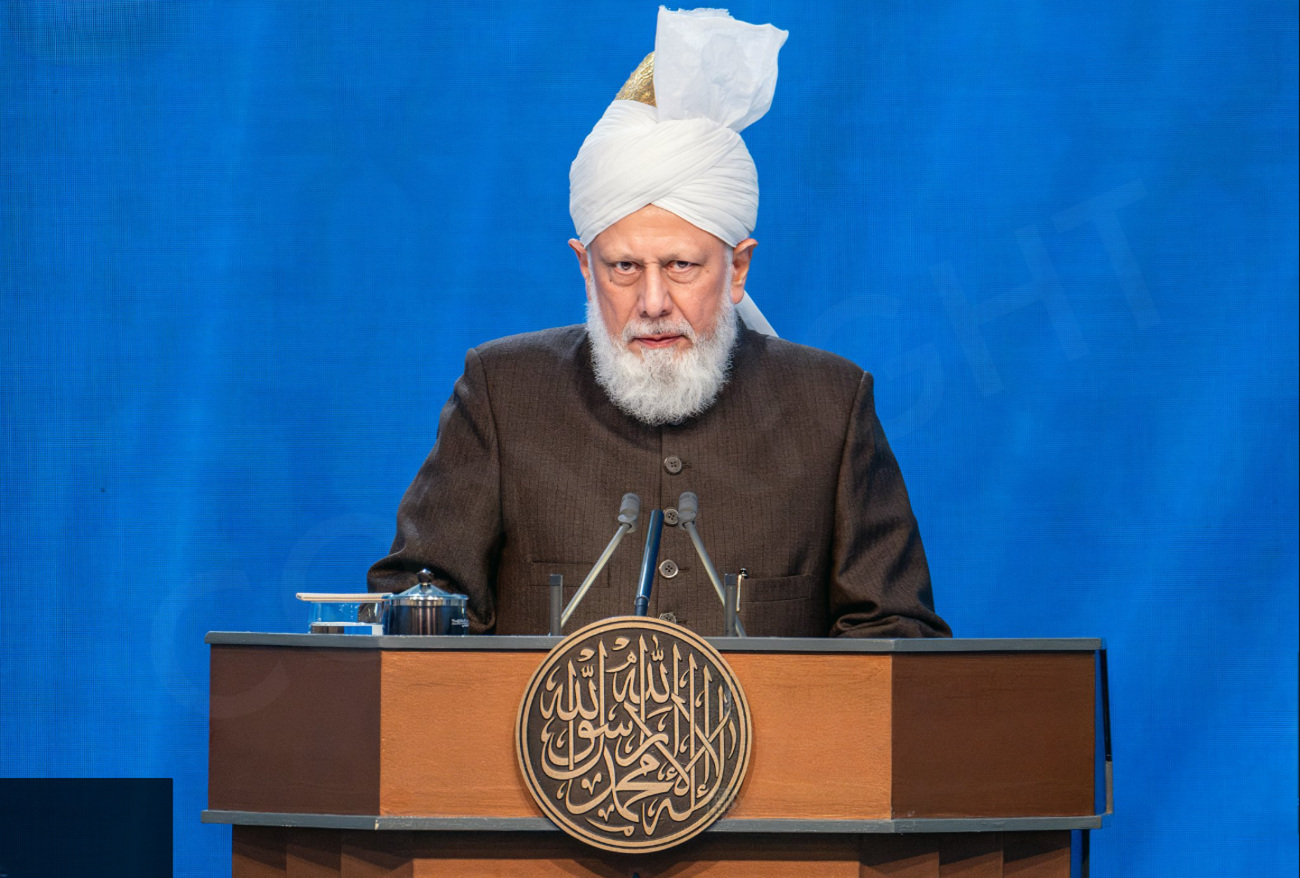
Hazrat Khalifatul Masih Vaba recently instructed at Qadian Jalsa 2025 that the Ten Conditions of Bai‘at should be hung up in our homes and that we should strive to abide by them strictly. All of these conditions should become a part of our daily principles and not just a mere customary recitation of words.
When every member of the Jama’at follows these rules, order and peace is established and people are prevented from being harmed, whether it be physically or verbally. When emotions arise, others feelings are sometimes disregarded. When disagreements occur we may feel our self respect has been challenged.
This condition addresses a reality of human nature: passion, anger, jealousy, and pride can all push a person towards harming others. Islam does not deny these impulses exist; rather, it teaches us how to control them. The condition makes it clear that harm is prohibited in every form, physical harm, verbal harm, emotional harm, and even indirect harm, whether done by the hand, the tongue, or any other means. This applies to all of Allah’s creation, and even more strictly to Muslims.
Allah the Almighty commands restraint and moral excellence in clear terms:
الَّذِیۡنَ یُنۡفِقُوۡنَ فِی السَّرَّآءِ وَالضَّرَّآءِ وَالۡکٰظِمِیۡنَ الۡغَیۡظَ وَالۡعَافِیۡنَ عَنِ النَّاسِ ؕ وَاللّٰہُ یُحِبُّ الۡمُحۡسِنِیۡنَ ﴿۱۳۵
“Those who spend (in the way of God) in ease and in hardship, who restrain their anger, and who pardon people and Allah loves those who do good.”
—(Holy Qur’an, Surah Al-e-Imran, 3:135)
This verse sets a high moral standard. True righteousness is not shown only when things are easy, but also when one is angry or wronged. Suppressing anger, forgiving others, and doing good are not weaknesses; Allah declares that He loves those who act in this way.
The practical power of this teaching is illustrated through an incident of Hazrat Imam Husainra. When a servant accidentally caused him harm, the servant recited successive parts of this verse. Hazrat Husainra first suppressed his anger, then forgave the servant, and finally granted him freedom when reminded that Allah loves those who do good. This incident shows that Qur’anic morals are not theoretical ideals, but principles meant to be acted upon immediately, even in moments of personal irritation.
Islam does not teach emotional suppression, nor does it endorse unrestrained anger. The Promised Messiahas explained that forgiveness is a moral quality only when it reforms and prevents further harm. Where forgiveness enables injustice, wisdom demands restraint and justice. The goal is never retaliation, but moral balance — the ability to respond without becoming a source of harm.
The Holy Prophet Muhammadsa captured the essence of this balance when he pointed to his chest and declared that taqwa lies within the heart. True righteousness is internal before it is external. It manifests in controlled speech, restrained action, and the refusal to let anger dictate behaviour. A believer does not insult, humiliate, or harm others simply because emotions feel justified.
One of the most common ways this condition is violated is through jealousy. The Promised Messiahas warned that jealousy destroys sincerity and breeds hostility. It turns brothers into rivals and service into competition. When jealousy enters religious spaces, it ruins trust and breaks unity. For a Khadim, harming another through words, attitudes, or online conduct is not a minor lapse, it is a failure to uphold Bai‘at.
Hazrat Abu Dhar al-Ghifarira acted upon the instruction of the Holy Prophetsa that when anger arises while standing, one should sit, and if anger persists, one should lie down (Musnad Ahmad ibn Hanbal, vol. 5, p. 152). Another hadith teaches that anger comes from Satan, and since fire is extinguished by water, performing ablution helps cool anger (Musnad Ahmad ibn Hanbal, vol. 4, p.226). These teachings turn self-control into a practical discipline, not an abstract ideal.

The Promised Messiahas laid down a clear standard for those who enter his Jama‘at. An Ahmadi must safeguard their tongue, hands, and intentions from causing harm. Speech must not wound, actions must not oppress, and reactions must not betray moral restraint. He warned that persistent harshness and cruelty are incompatible with the spirit of Bai‘at and endanger the moral health of the community.
For Khuddam, this condition is tested daily. It governs how disagreements are handled, how criticism is expressed, and how provocation is met. It applies online as much as offline, in private spaces as much as public ones. Choosing restraint over reaction, dignity over dominance, and justice over revenge is not easy — but it is precisely where your character is forged.
To cause no harm is not weakness. It is strength under control. It is courage without cruelty. It is faithfulness strong enough to withstand provocation without surrendering principles. A Khadim who lives this condition does more than fulfil a pledge — he becomes a shield for the Jama‘at, a reflection of Islam, and a man whose strength lies in restraint.
Meekness and humility are repeatedly emphasised. The Promised Messiahas urged believers to replace anger with gentleness, to repent sincerely, and to adopt righteousness in both private and public life. He reminded the Jama‘at that not every wrong requires confrontation, and that forgiveness and overlooking faults are often signs of spiritual strength, not weakness (Malfuzat, vol. 1, pp. 134–135).
In a final and forceful admonition, the Promised Messiahas declared that those who respond to harshness with harshness, or who cannot tolerate abuse without losing moral restraint, fail to meet the standard expected of his Jama‘at. Legal recourse may be permissible, but retaliation in kind is not. He made it clear that persistent failure to act upon this condition distances a person from the true spirit of the Jama‘at (Tabligh-e-Risalat, vol. 6, p. 170)
To refrain from harm is not passive neutrality; it is an active commitment to justice, restraint, forgiveness, and moral courage. It is through living this condition that an Ahmadi becomes a reflection of the teachings of Islam and a true representative of the Jama‘at of the Promised Messiahas.
Articles
Kicking Off the Year – Khadim Style
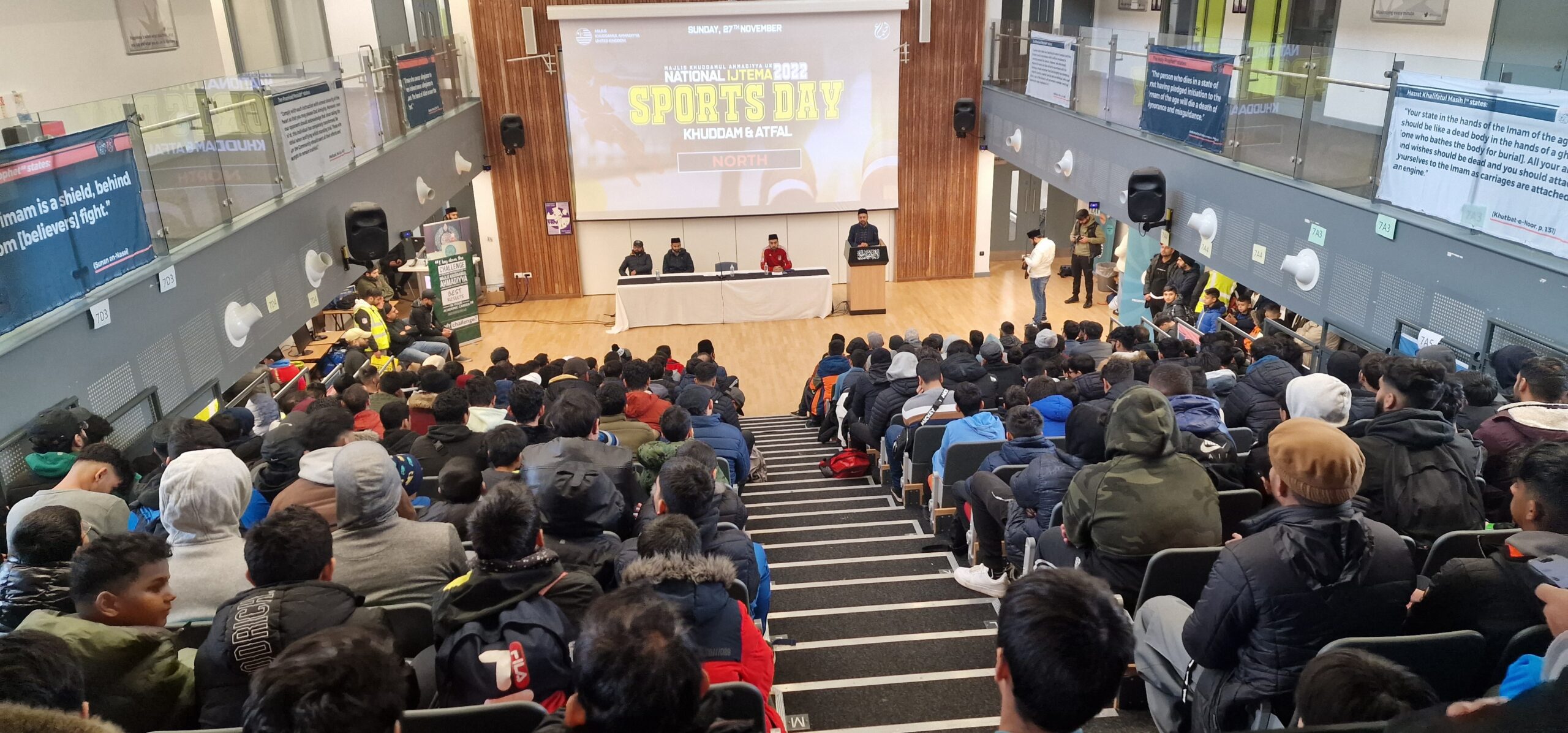
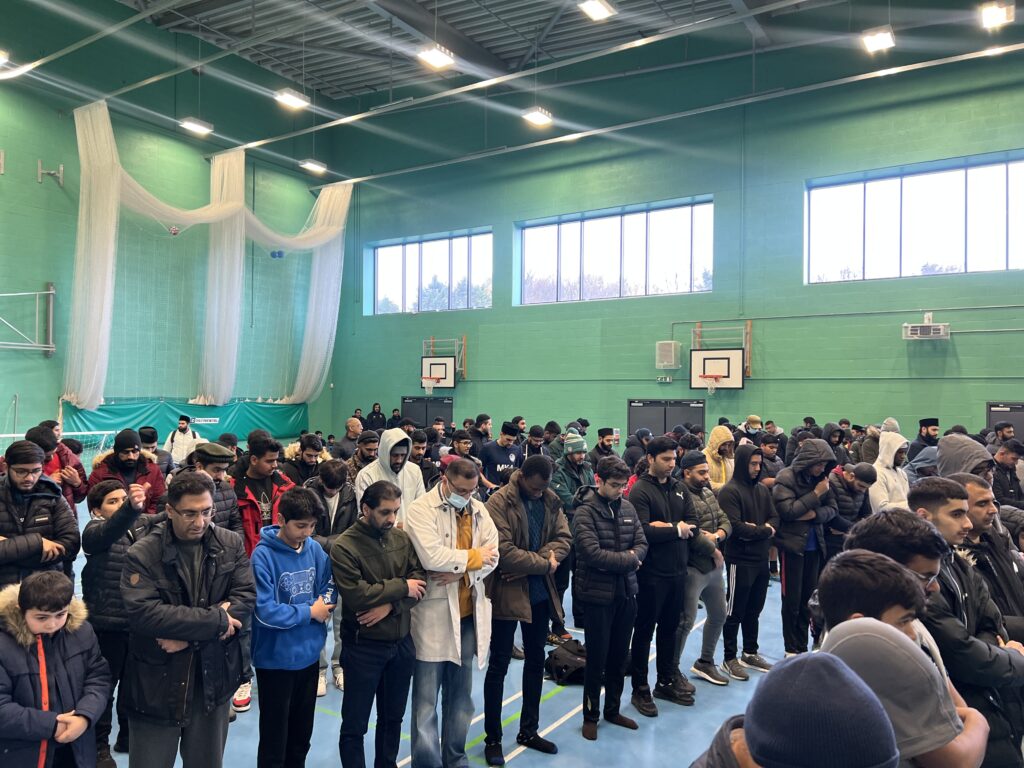
The National Ijtema Sports day for Northern Regions is currently underway in Bradford at Dixons Allerton Academy, and the Khuddam and Atfal present here are thoroughly enjoying all the activities and sessions that are taking place.
Majlis Khuddamul Ahmadiyya UK is holding this sports day on the instructions of Huzooraba after sports at the National Ijtema 2022 were cancelled due to the demise of Her Majesty Queen Elizabeth II as a mark of respect. Huzooraba instructed the Majlis that the sports that were due to take place at the Ijtema should be organised as soon as possible for the benefit of all Khuddam and Atfal that missed out. Subsequently, it was decided for the Majlis to hold 2 sports days – one for the northern regions (taking place today) and another for the southern regions (date to be announced).
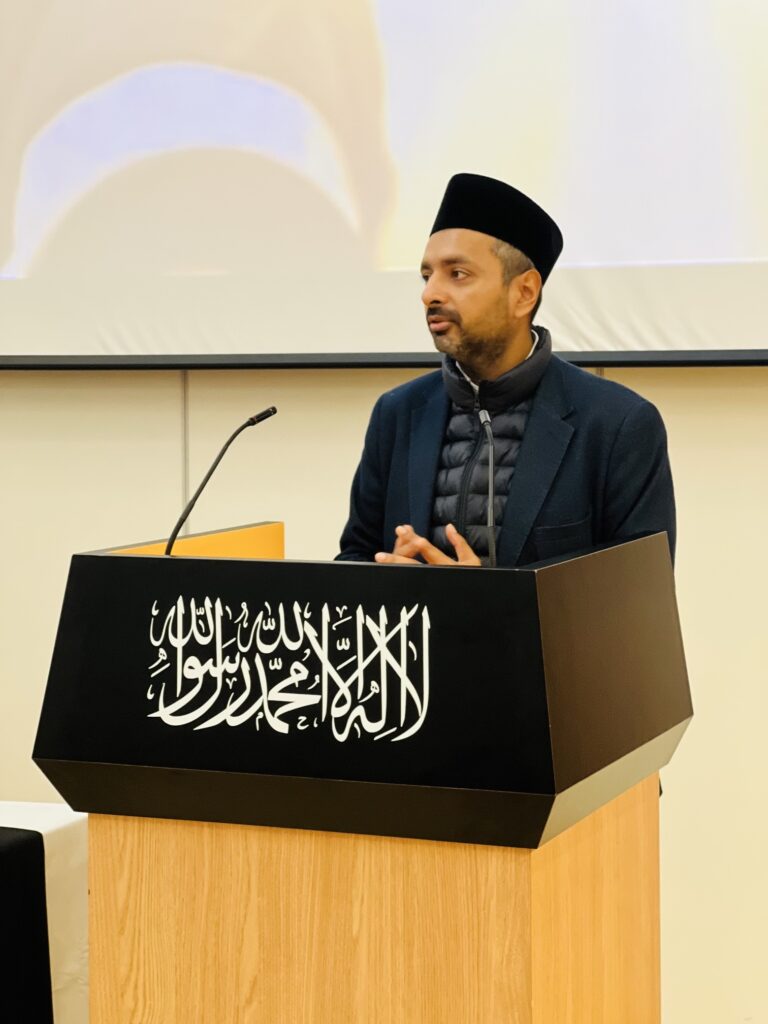
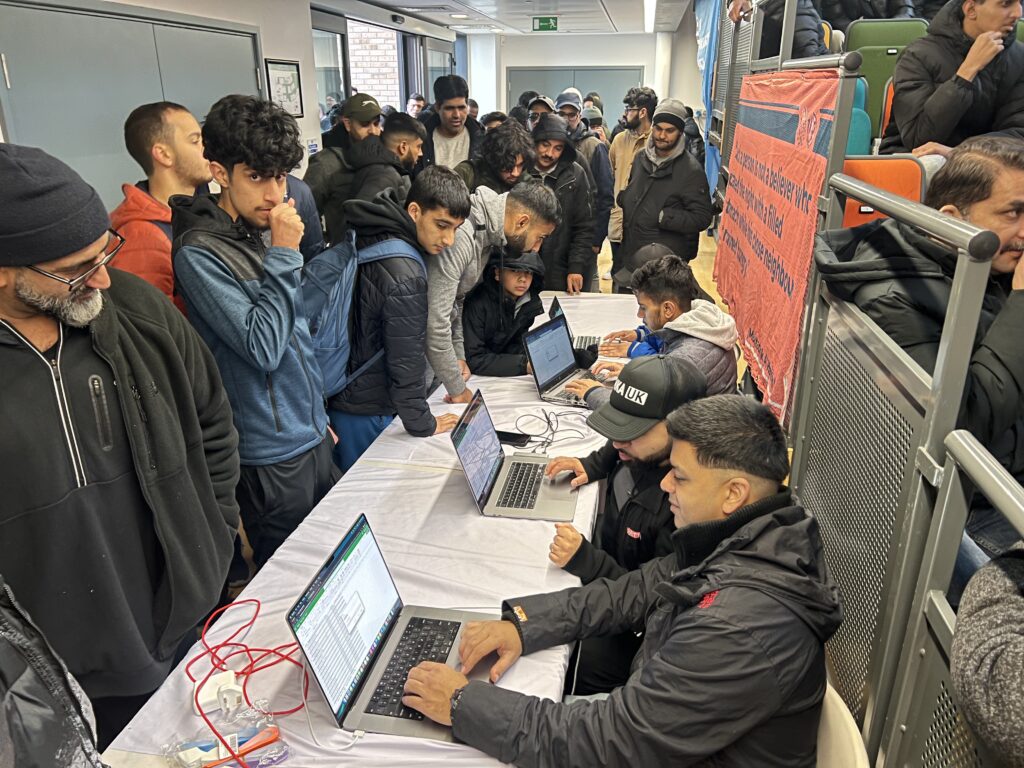
Registration started at 8am with Khuddam and Atfal arriving from all around the northern parts of the UK with breakfast served in the marquees set up onsite. The event started at 10am with an opening session chaired by the Nazime Ala Sahib Ijtema, Tariq Hayat Sahib. The plan for the day was announced by Mohtamim Sahib Sehate-Jismani, Abdur Rauf Lodhi Sahib.
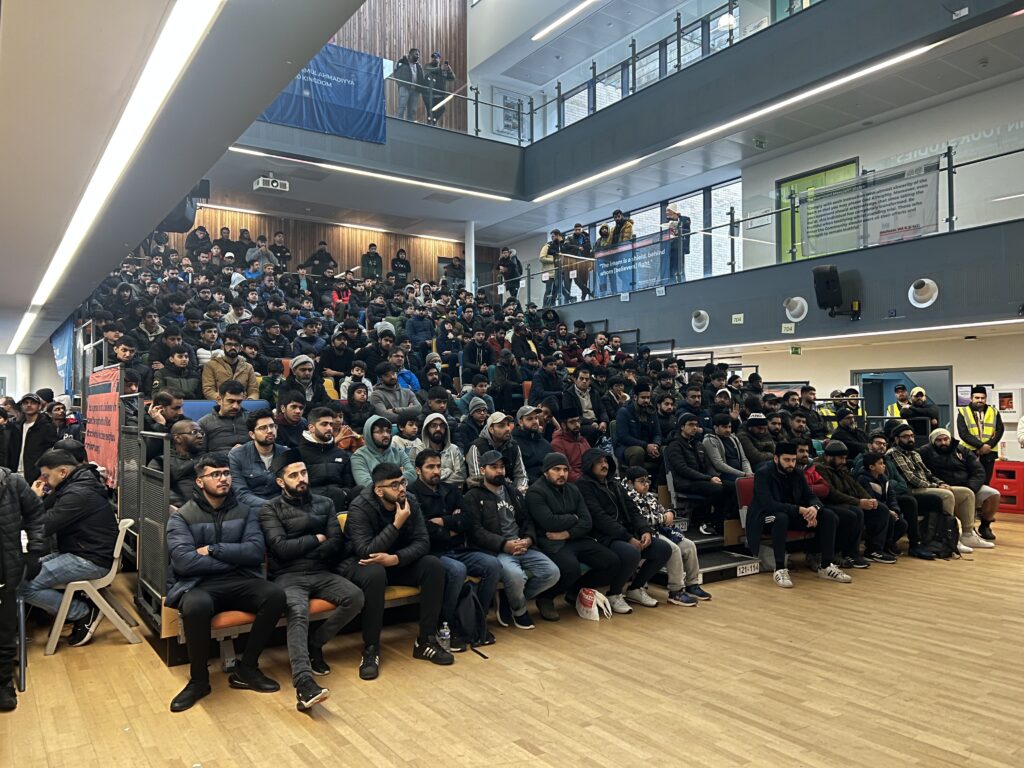
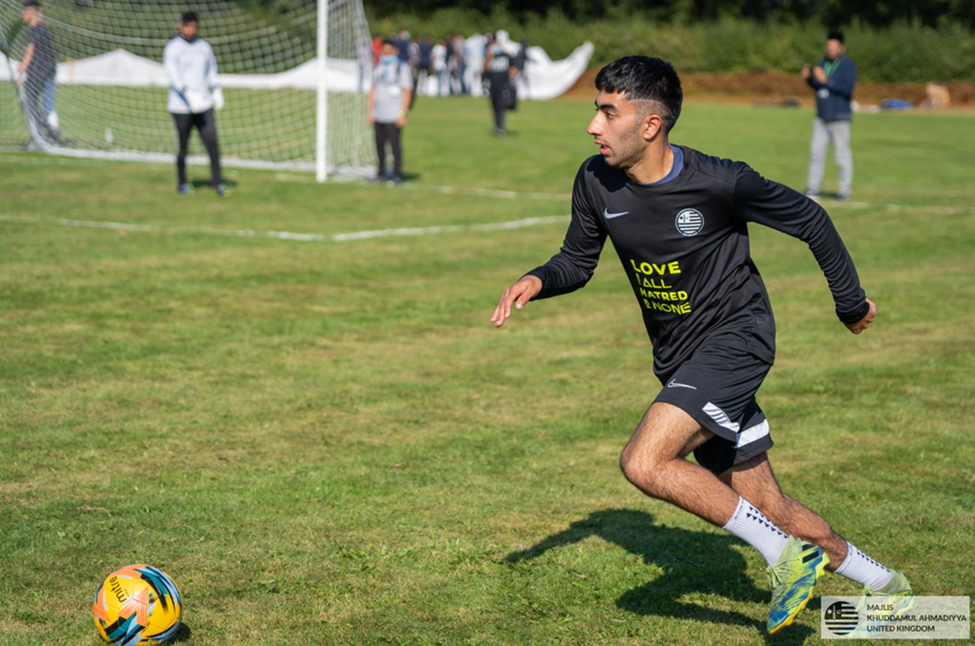
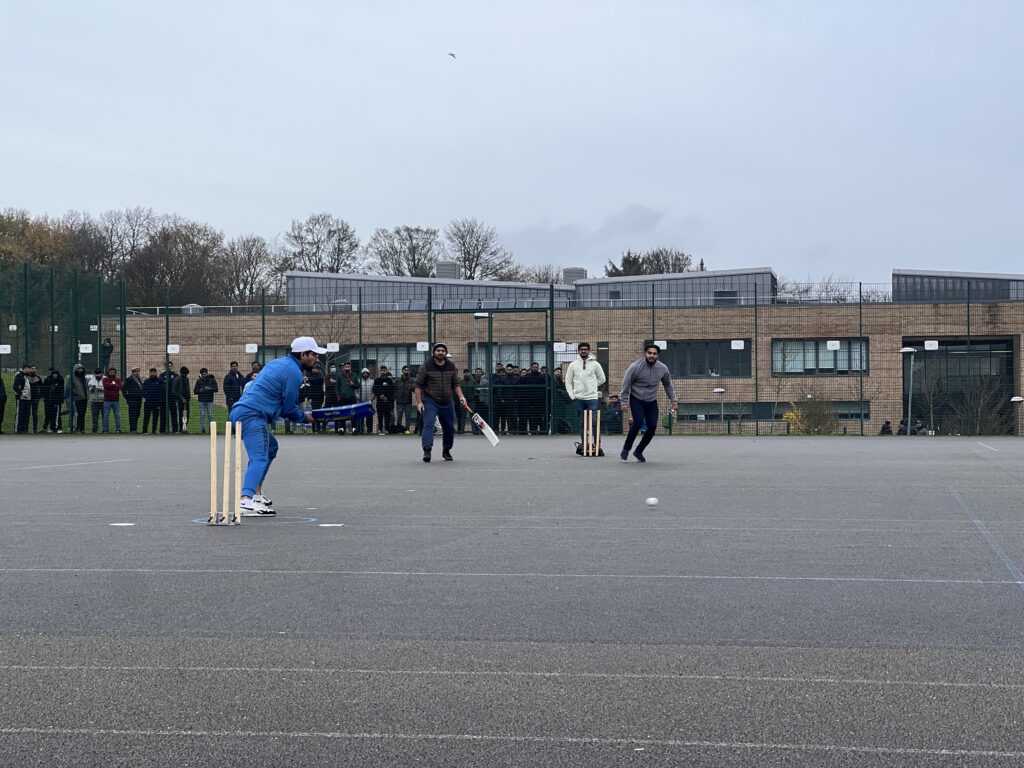
Football and Cricket for Khuddam and Atfal took place in grass fields and netball courts. Tarbiyyat ‘Chit Chat Chai’ were held at the auditorium, alongside outdoor and indoor sports, on topics such as relationships, the key to paradise, and working hard or hardly working. The first talk covered a wide range of questions in relation to how Khuddam should approach the idea of getting married, how to decide on the type of spouse that they desire, the qualities they should look for and the attitude they adopt going into the process.
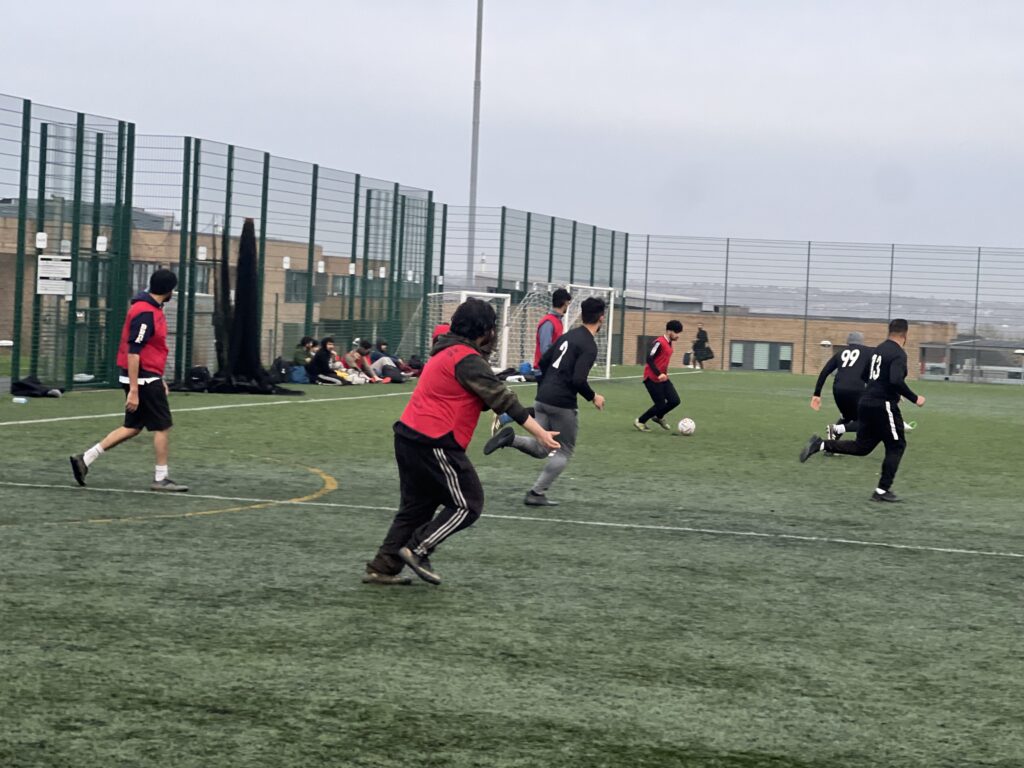
After Namaz-e-Zuhr and Ask a short Talqeen-e-Amal session took place which was on the topic of Namaz. This was followed by a continuation of sports. So far Khuddam and Atfal are finding this it to be a good opportunity to begin the year with an activity that binds the Majlis together in a spirit of brotherhood. The final session is due to take place after Maghrib Namaz, where winning teams will be given prizes by Sadr Majlis Khuddamul Ahmadiyya. The Khuddam and Atfal attendance at the Sports Day is 780, Alhamdulillah.

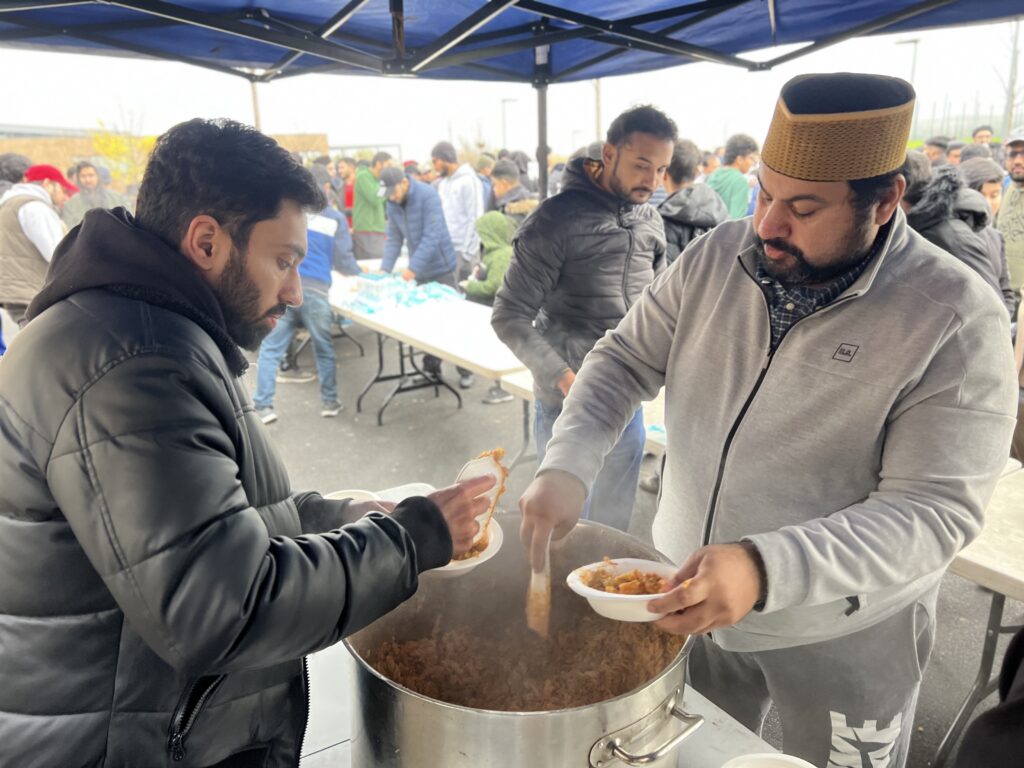
Here is some of the feedback from the Khuddam on today’s event.
A Khadim form North West, Abdul Ghalib Sahib, said that “The event has been really good so far, I enjoyed coming together with Khuddam again after the sports were previously cancelled at the Ijtema due to the demise of the Queen”. Another khadim, Waheed Ahmad, said that “It was good that Majlis has found a window to hold such an important event of the Khuddam year”. Another khadim from Scotland said that “It is important for Ahmadi youth to come together, build a sense of togetherness and develop brotherhood.”
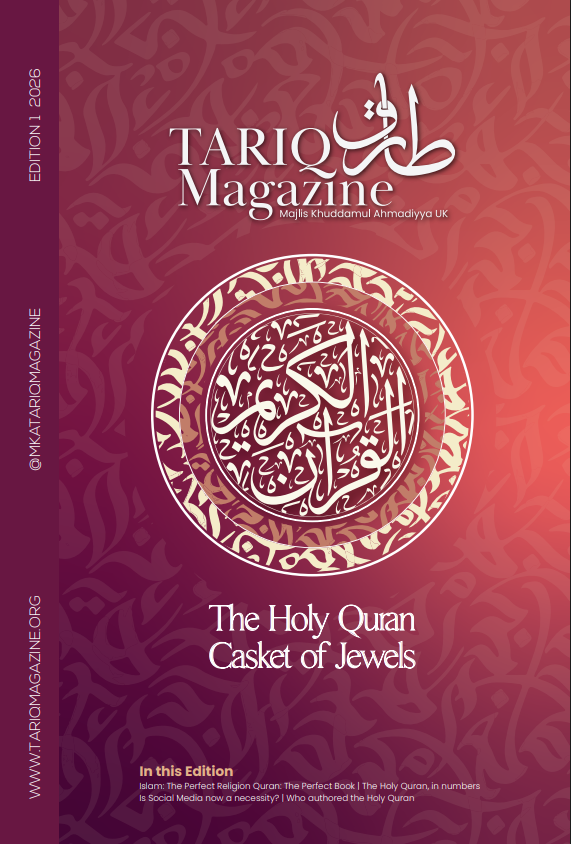
Get the Tariq Magazine through your letterbox each month.

Faith, Palestine and the Path to Peace: An Open Dialogue with Sharif Odeh Sahib

A Spiritual and Moral Training